
You've got the trucks. You've got the techs. The phone keeps ringing with new jobs. But at the end of the month, the numbers just don't add up the way they should.
Here's the reality most plumbing company owners face: your dispatch system is quietly bleeding profits, and it's happening in ways that are hard to see until you map them out. We're not talking about obvious mistakes like sending someone to the wrong address (though that happens too). We're talking about the daily friction that turns a potentially $50k month into a $40k month: or worse.
After working with dozens of home service operators, we've identified three dispatch bottlenecks that consistently cost plumbing businesses $10,000+ per month in lost revenue, wasted resources, and missed opportunities. Let's break them down.
Bottleneck #1: Manual Field-to-Office Communication
Your technician finishes a water heater replacement at 2 PM. He texts dispatch. Dispatch updates the whiteboard. Someone manually enters it into ServiceTitan or Jobber… eventually. Meanwhile, the customer calls asking about their invoice. Your office scrambles to piece together what actually happened in the field.
Sound familiar?
Manual communication creates a cascade of problems:
- Jobs take 15-30 minutes longer to close out because techs are writing notes, taking photos, and then re-explaining everything to dispatch over the phone
- Emergency calls get missed or delayed because dispatch doesn't have real-time visibility into who's actually available
- You can't accurately quote arrival times to customers because you're guessing where your trucks are
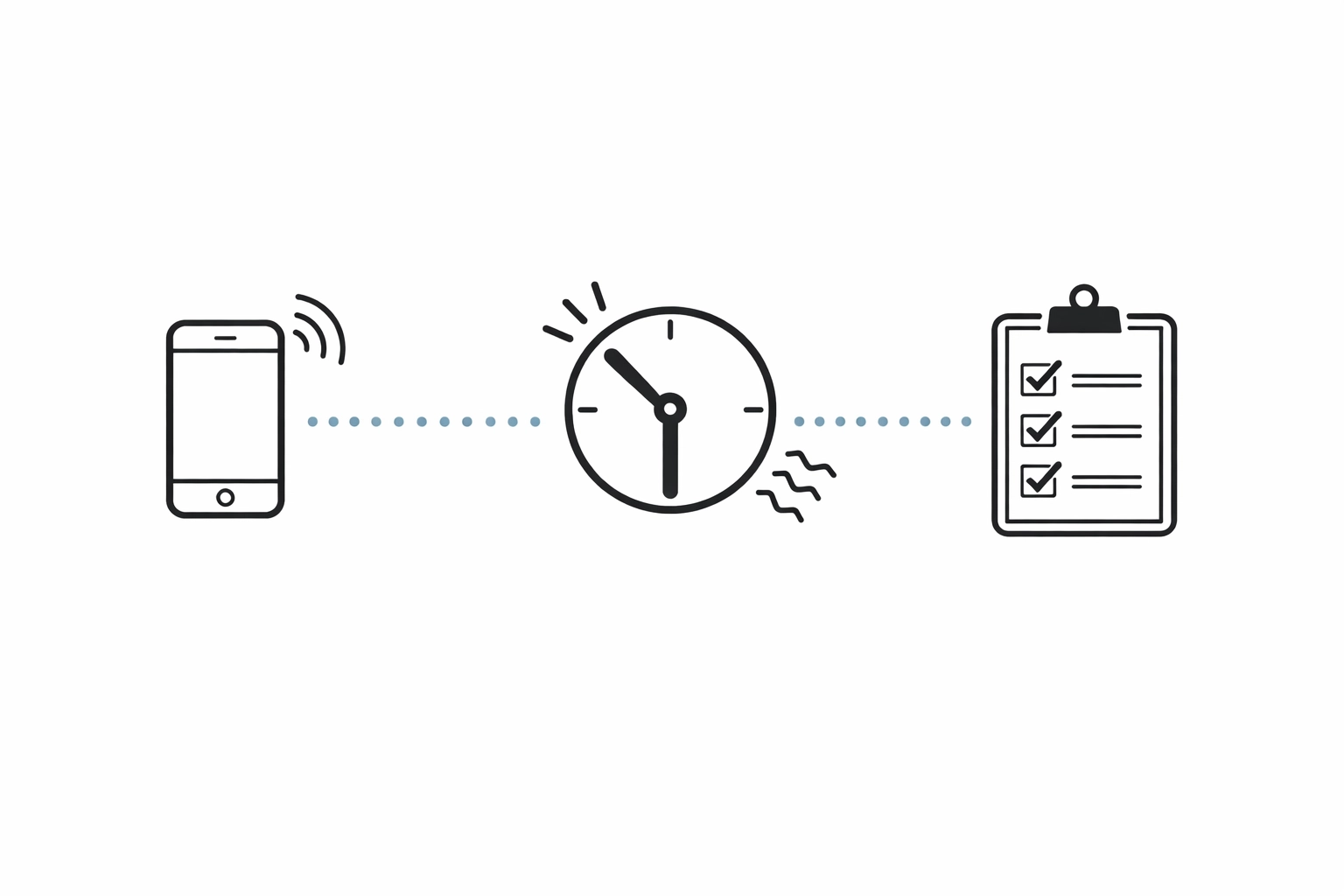
Here's the math: If each of your five techs wastes just 20 minutes per day on communication friction, that's 1.67 hours of billable time lost daily. At an average billable rate of $150/hour, you're losing $1,250 per week or roughly $5,000 per month just on communication overhead.
And that doesn't count the emergency calls that go to your competitor because your dispatch couldn't confidently say, "We can be there in 45 minutes."
Research shows that 73% of customers switch providers after just two negative experiences. In emergency plumbing, a vague "we'll try to get someone there this afternoon" is often all it takes to lose them permanently.
Bottleneck #2: Unclear Scheduling and Capacity Planning
Pop quiz: Right now, without looking at a screen, can you tell me exactly how many jobs each of your techs can realistically handle tomorrow?
Most plumbing owners can't answer that with certainty. And that uncertainty costs real money.
The capacity blind spot shows up as:
- Over-promising to customers and then scrambling to cover missed appointments
- Underutilizing your team because you're being overly cautious about booking
- Sending techs on inefficient routes that waste hours in drive time
- Missing the sweet spot where you could squeeze in one more high-value emergency call
Without GPS-based route optimization and real-time capacity tracking, your techs spend extra hours behind the wheel instead of turning wrenches. Poor routing alone can reduce the number of jobs your team completes per day by 15-20%.
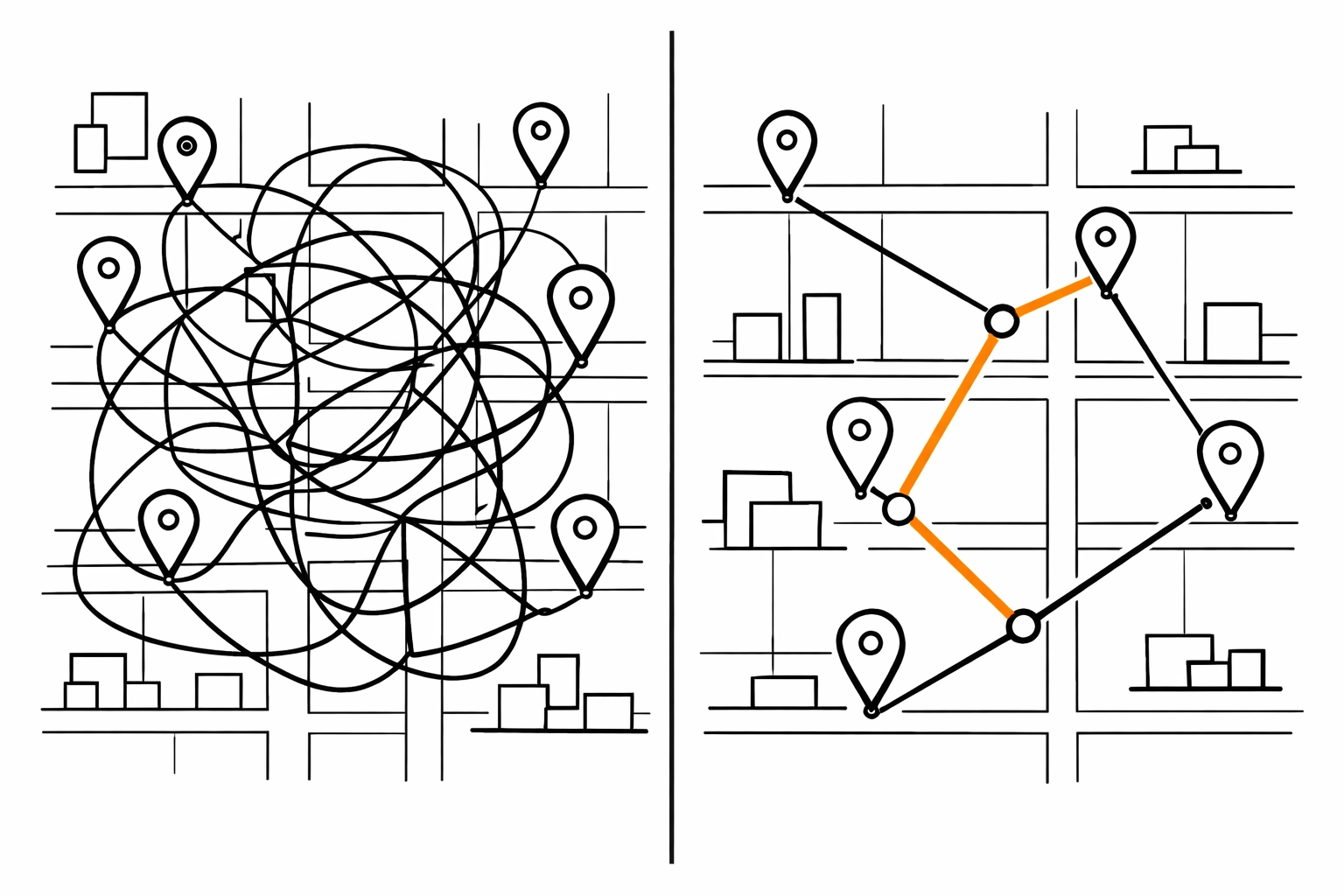
Let's be conservative: Say you run four trucks, and better routing could help each tech complete just one additional job per week. That's four extra jobs weekly. At an average ticket of $400, that's $6,400 per month in revenue you're leaving on the table simply because your scheduling system can't show you the optimal way to stack jobs.
During peak seasons: think frozen pipes in January or AC-to-plumbing crossover emergencies in summer: this bottleneck becomes even more expensive. When demand surges, unclear capacity planning means you're either turning away work (losing revenue) or burning out your team (losing people).
Bottleneck #3: The Data Handoff Gap Between Field Software and Financials
Here's where things get really messy.
You've invested in ServiceTitan or Jobber. Your field data lives there: job details, customer history, parts used, labor hours. But your financial data: actual profitability, cash flow, real job costing: lives in QuickBooks or Xero.
And these systems don't talk to each other. Not really.
So every week, someone on your team manually exports data, reformats spreadsheets, reconciles discrepancies, and tries to build reports that show you what's actually profitable. By the time you see the numbers, they're already two weeks old.
This gap creates three expensive problems:
1. You can't see real job profitability in real-time. That "profitable" drain cleaning route you keep running? It might actually be losing money once you factor in drive time, parts markup errors, and unbilled labor. But you won't know until month-end, if at all.
2. You make decisions on incomplete data. Should you hire another tech? Invest in a new truck? Raise prices on certain services? Without integrated data flowing from field to financials, you're guessing.
3. Your team wastes hours on manual data entry. Someone's job: maybe yours: is to play "data translator" between systems. That's expensive overhead that doesn't generate a dollar of revenue.
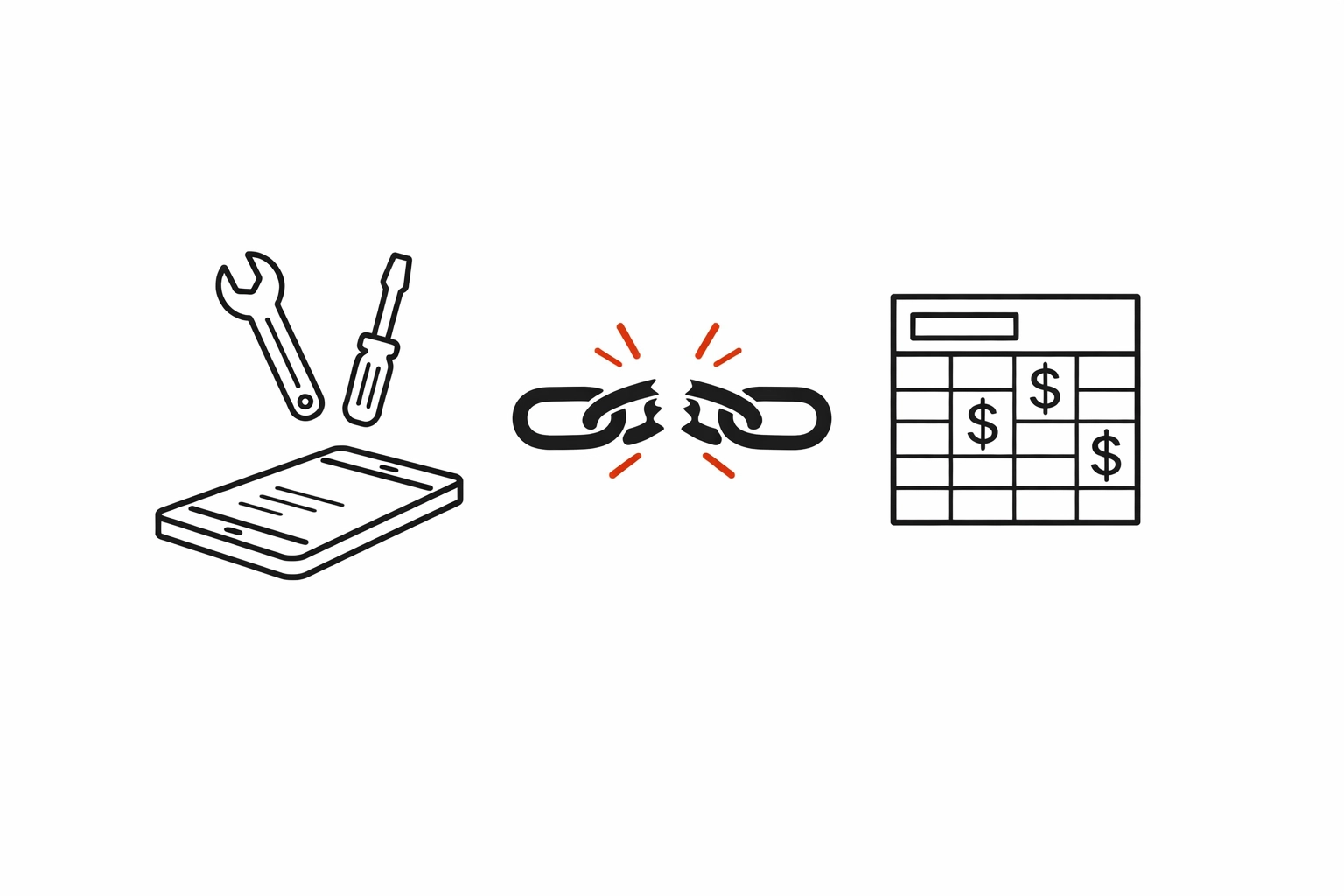
Conservative estimate: If reconciling data manually takes 10 hours per week at a loaded cost of $50/hour (including the opportunity cost of what else you or that person could be doing), that's $2,000 per month in pure waste. And that doesn't account for the poor decisions made from stale or incomplete data.
The Compounding Effect
Here's the really painful part: these bottlenecks don't exist in isolation. They compound each other.
Manual communication slows down scheduling. Poor scheduling makes capacity unclear. Unclear capacity means your field software doesn't reflect reality. And when your field software doesn't match your financials, you can't accurately measure what's working.
It's a profit-killing feedback loop.
Add them up:
- $5,000/month lost to communication friction
- $6,400/month lost to poor routing and capacity planning
- $2,000/month lost to manual data reconciliation
That's $13,400 per month. And we've been conservative in every estimate.
How Sentric Group Bridges These Gaps
We don't sell you another software subscription. You've probably got enough of those already.
What we do is build the connective tissue between your existing systems: ServiceTitan, Jobber, QuickBooks, your dispatch process: so they actually work together instead of creating more work.
Here's our Audit-Build-Share approach:
Audit: We map your current dispatch workflow end-to-end. Where does information get lost? Where are manual handoffs? Where are decisions being made on guesswork instead of data? We'll show you exactly where the $10k+ leak is happening in your operation.
Build: We create custom automations and integrations that connect your field software directly to your financial systems. Real-time job data flows automatically. Your dispatch dashboard shows actual tech locations and availability. Your financials update without manual exports. It's not magic: it's just proper systems architecture.
Share: We build dashboards that put this data in front of you in a way that's actually useful. Real job profitability by service type. Capacity utilization by tech. Revenue per truck per day. The metrics that let you make confident decisions without waiting until month-end.
The result? Calm operations. Your team stops playing phone tag. Your dispatch can confidently book jobs because they know real capacity. And you finally see which parts of your business are genuinely profitable.
Your Next Step
You didn't get into the plumbing business to become a systems integration expert. You got into it to build something, serve customers, and run a profitable operation.
But if you're running 3+ trucks and still managing dispatch with texts, whiteboards, and manual data entry, you're working way too hard for the revenue you're generating.
We specialize in home services operations: HVAC, plumbing, electrical: because these businesses share similar dispatch bottlenecks and similar profit leaks.
Want to see where your specific $10k+ leak is happening? We'll start with a systems audit that maps your current workflow and shows you exactly where the friction is costing you money. No pressure, no sales pitch: just clarity on what's broken and how to fix it.
Because the fastest way to grow revenue isn't always getting more customers. Sometimes it's just keeping the profits you're already earning.
Sentric Group helps home service operators build calm, profitable operations through systems consulting and automation. Learn more at sentricgrp.com.