
You're paying for Jobber. Maybe QuickBooks. Probably a CRM. Your team's got their phones, their tablets, and a dozen spreadsheets nobody remembers starting.
And you? You're the glue holding it all together. You're copying job details from Jobber into your bookkeeping software. You're forwarding invoices manually. You're reading through supplier emails at 10 PM, trying to update inventory counts before tomorrow's install.
Twenty hours a week. That's the average administrative overhead for HVAC owners running 5–12 trucks.
What if I told you that most of that time isn't spent doing real work, it's spent moving information from one place to another?
The Software You Already Own Is Good. The Gaps Between Them Are Killing You.
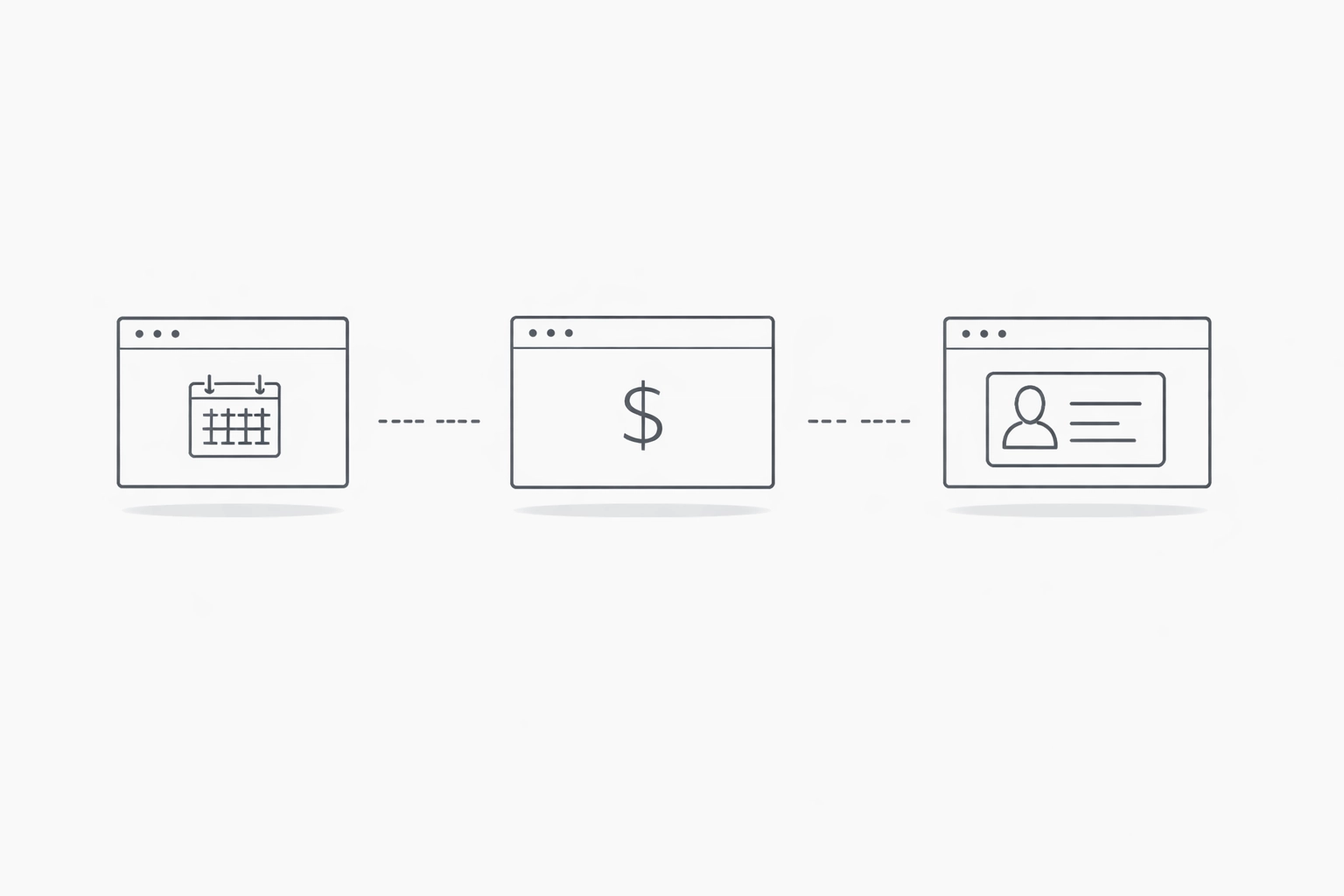
You didn't buy bad software. Jobber handles scheduling. QuickBooks manages the books. Your CRM tracks leads. Each tool does its job well.
The problem? They don't talk to each other.
So you become the translator. The human API. The guy manually syncing data because "that's just how it works."
Until it doesn't.
A custom software bridge is a lightweight automation layer that connects your existing tools. It doesn't replace Jobber or QuickBooks, it makes them work together without you in the middle.
Most HVAC owners assume custom software means a six-figure development project and a year-long timeline. That's enterprise thinking. For field service operations, the builds are smaller, faster, and shockingly affordable.
We're talking $2,500. Not $25,000.
What 20 Hours of Manual Work Actually Looks Like
Let's get specific. Here's what "administrative overhead" actually means in a 7-truck HVAC operation:
Daily data transfer:
- Copying completed job info from Jobber into QuickBooks (15 min/day)
- Updating your internal dashboard with yesterday's revenue and job counts (20 min/day)
- Manually pulling technician performance data for weekly reviews (30 min/week)
Invoice and email chaos:
- Forwarding supplier invoices to your bookkeeper (10 min/day)
- Reading through parts delivery confirmations and updating inventory (25 min/day)
- Chasing down PO approvals via email chains (20 min/day)
Reporting and tracking:
- Building weekly revenue reports by hand (45 min/week)
- Updating your "jobs in progress" board manually (15 min/day)
- Cross-checking job costs against estimates in three different places (30 min/week)
Add it up, and you're spending 2–3 hours every single day just shuffling information around. That's 15–20 hours per week doing work a $2,500 automation could handle in seconds.
How a Software Bridge Actually Works
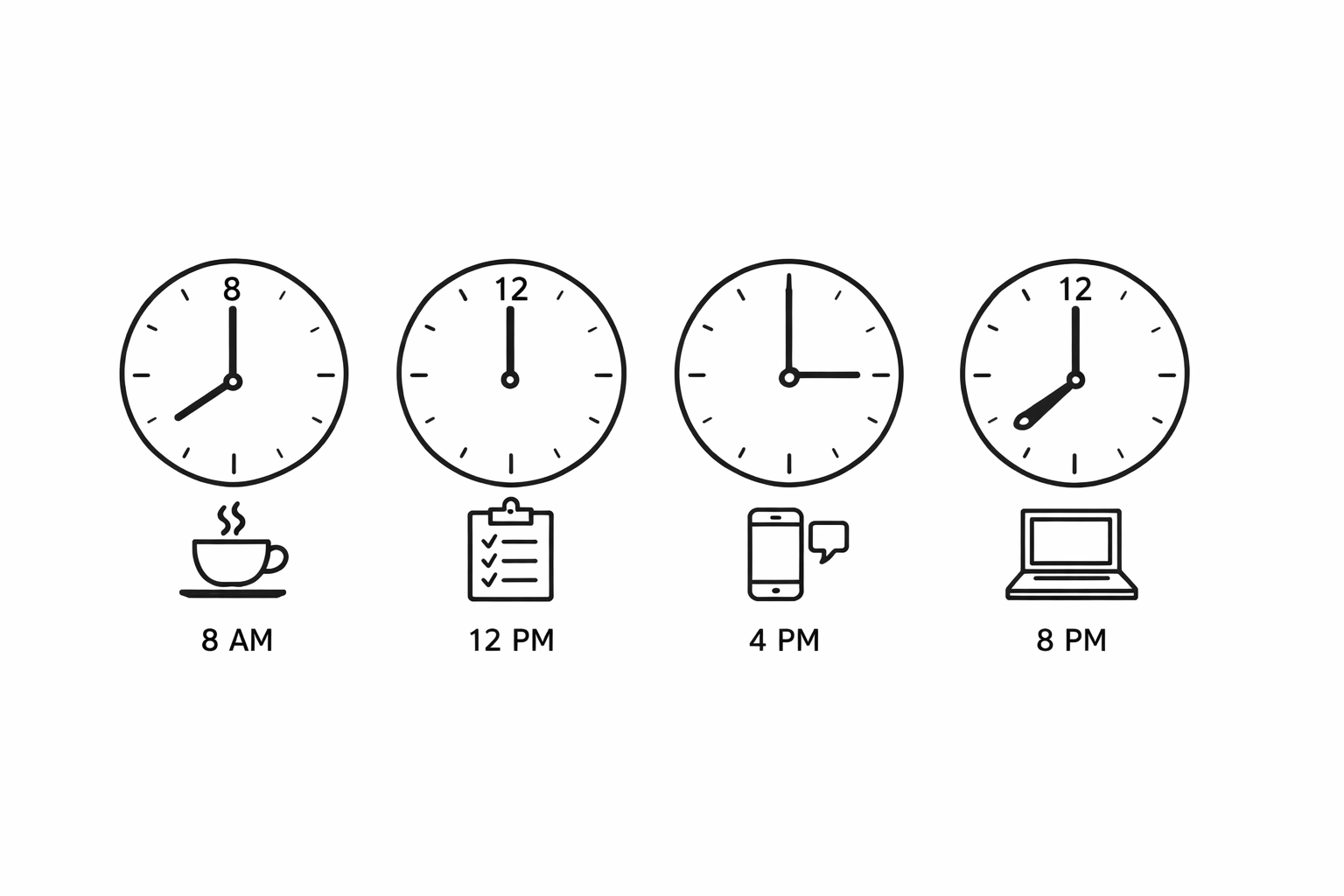
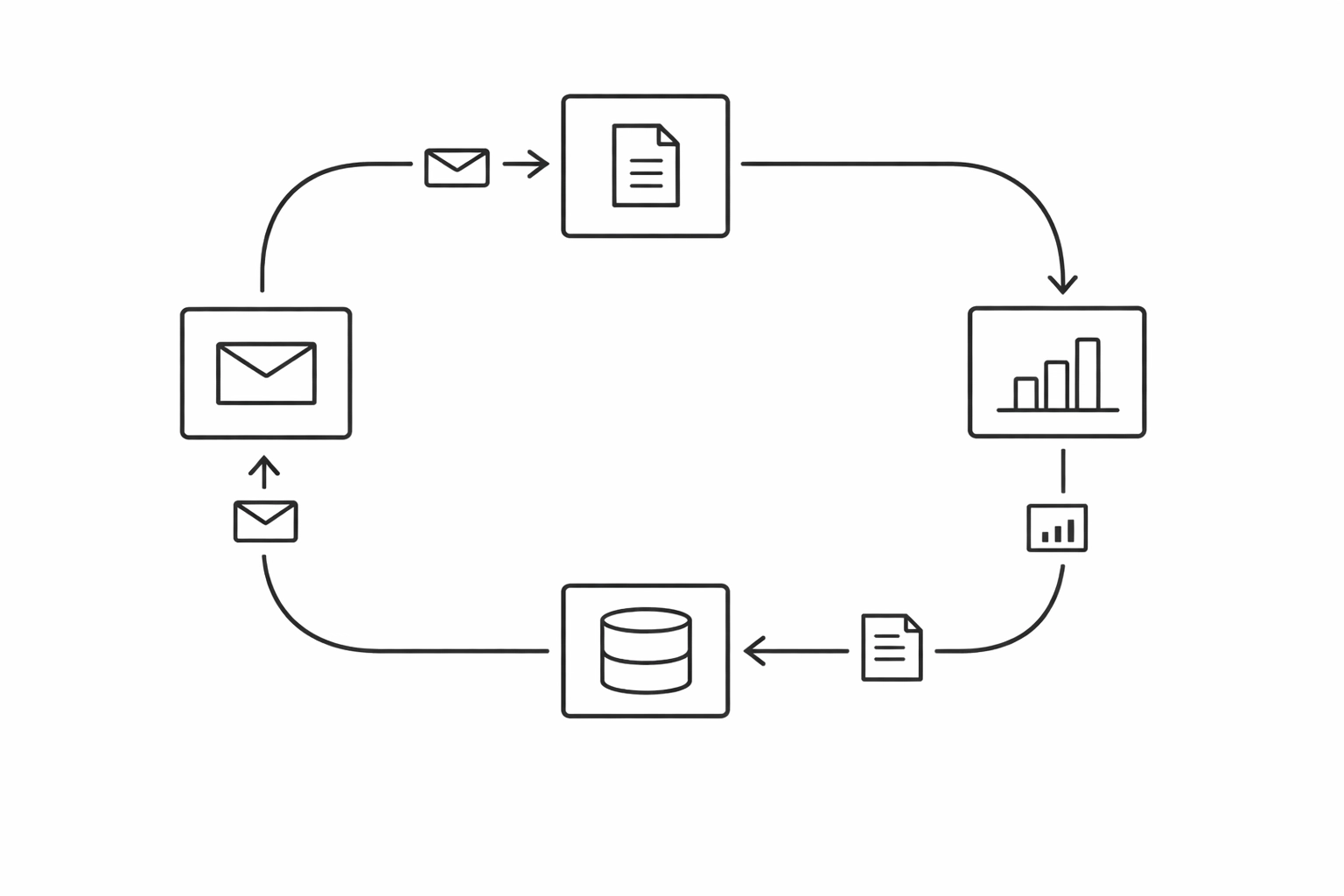
A software bridge sits between your tools and watches for specific triggers. When something happens in Tool A, the bridge automatically updates Tool B. No manual input. No copy-paste. No "I'll get to it later."
Example 1: Jobber to Dashboard Sync
Your techs close out jobs in Jobber all day. At 6 PM, you manually pull the day's numbers: total revenue, job count, average ticket: and drop them into your internal dashboard.
A bridge automates this completely:
- When a job is marked "complete" in Jobber, the bridge reads the invoice total, job type, and technician name
- It pushes that data directly into your dashboard in real time
- Your profitability tracker updates automatically
- You see live numbers without touching a spreadsheet
Time saved: 20 minutes per day. That's 7 hours per month.
Example 2: Email Invoice Parser
Your parts suppliers send invoices via email. Every single one requires you to open the PDF, check the line items, forward it to your bookkeeper, and manually log the expense.
A bridge with document-reading automation does this:
- The bridge monitors your parts@yourcompany.com inbox
- When an invoice email arrives, it extracts key data (supplier, total, PO number)
- It auto-forwards the email to your bookkeeper with a tagged subject line
- It logs the expense in a tracking sheet with a timestamp
Time saved: 10 minutes per day. That's 3.5 hours per month.
Example 3: Technician Performance Tracking
You run weekly performance reviews. Every Monday morning, you pull data from Jobber: jobs completed, average ticket, callback rate: and drop it into a Google Sheet so you can compare techs side-by-side.
A bridge eliminates this ritual:
- Every Sunday at midnight, the bridge pulls last week's data for each technician
- It calculates key metrics automatically (revenue per job, completion rate, callbacks)
- It populates a clean comparison table you open Monday morning
Time saved: 30 minutes per week. That's 2 hours per month.
The 98% Administrative Workload Reduction Isn't Marketing Speak
Here's how the math works.
Let's say you're spending 20 hours per week on administrative tasks that involve moving data between systems. A properly built bridge stack can automate 19.6 of those hours.
You're left with:
- Reviewing dashboards (15 min/week)
- Spot-checking anomalies (10 min/week)
- Making actual decisions based on clean data (15 min/week)
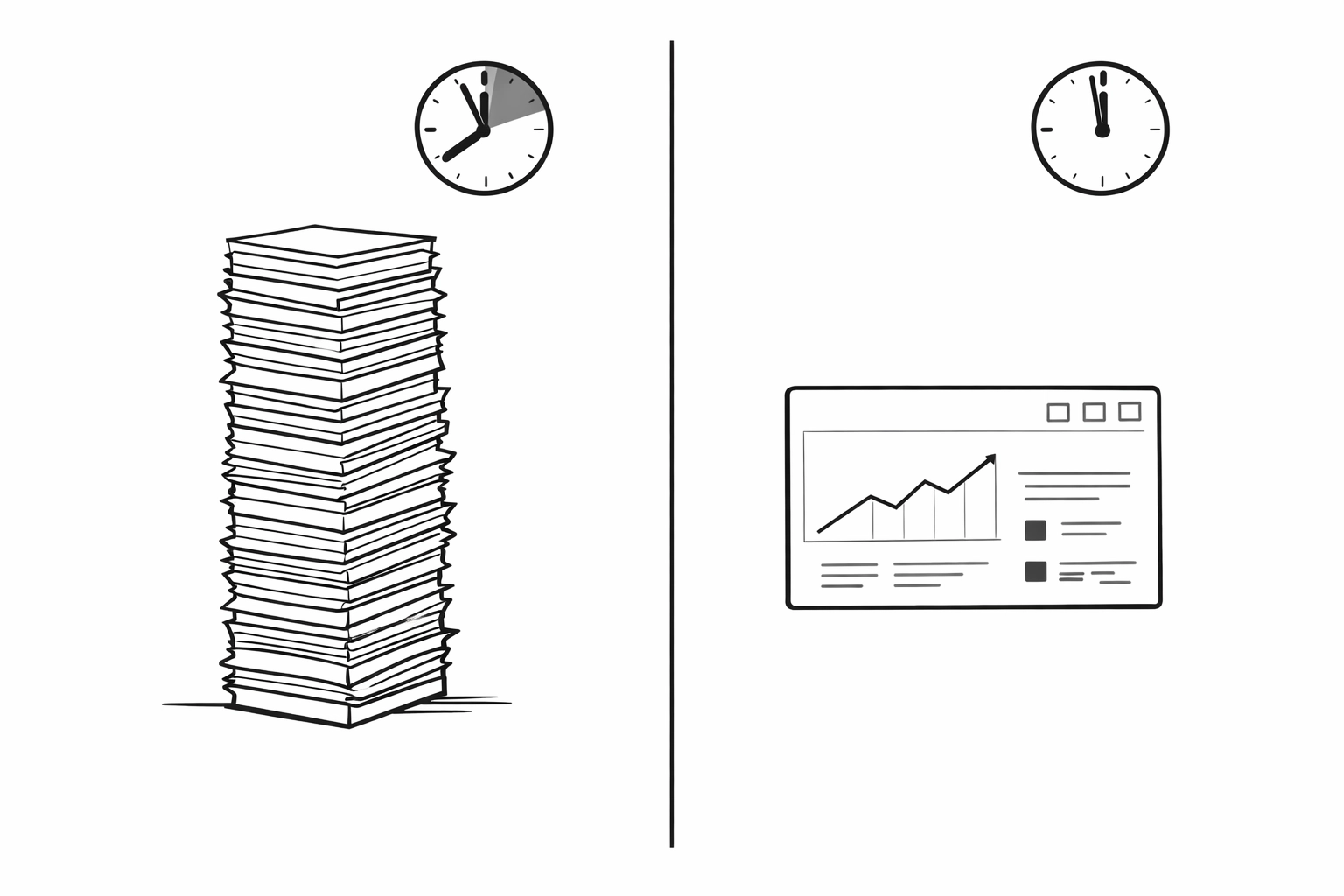
That's 40 minutes of real work versus 20 hours of data shuffling.
That's a 98% reduction.
The 2% you're still doing? That's the valuable stuff. The strategic thinking. The "should we bid this commercial job" conversations. The actual business ownership.
Why This Costs $2,500, Not $25,000
Most business owners hear "custom software" and think "enterprise project." That's not what this is.
You're not building Jobber from scratch. You're not replacing QuickBooks. You're creating lightweight connectors that use existing APIs: the data highways your software already has built in.
A typical HVAC bridge project includes:
- Jobber-to-dashboard sync for revenue tracking
- Email invoice parser with auto-forwarding
- Technician performance auto-reporting
- Parts inventory update automation
Timeline: 2–3 weeks. Cost: $2,000–$3,000.
Compare that to the alternatives:
- Hiring a part-time admin to handle data entry: $2,000/month ($24,000/year)
- Switching to an "all-in-one" platform that forces you to abandon Jobber: $15,000+ in migration costs, 6 months of chaos
- Buying a dashboard tool with manual CSV uploads: Still requires you to export, clean, and upload data weekly
A one-time $2,500 build pays for itself in 6–8 weeks compared to hiring help. And it works 24/7 without taking vacation.
What You Actually Get Back
It's not just about time. It's about what you do with the 20 hours you get back.
You can:
- Spend Tuesday mornings meeting with commercial property managers instead of updating spreadsheets
- Review your numbers every single day instead of scrambling for a monthly report
- Actually take a Saturday off without worrying that nobody updated the schedule
- Focus on hiring truck #8 instead of manually tracking truck #7's performance
One of our clients: an electrical contractor running 9 trucks: put it this way: "I used to spend Sunday nights prepping for Monday. Now I spend them with my family. The work still gets done. I'm just not the one doing it anymore."
The Build Process Is Simpler Than You Think
You don't need to be technical. You don't need to understand APIs or webhooks or any of that.
Here's how it works:
- Audit call – We walk through your current tools and identify the biggest time drains (45 minutes)
- Bridge design – We map out exactly what gets automated and where data flows (1 week)
- Build and test – We build the bridges, test them with real data, and hand you the keys (1–2 weeks)
- Handoff – You get a simple dashboard showing what's automated and a 15-minute walkthrough
No long contracts. No monthly SaaS fees. You own the automation.
You've Already Paid for the Tools. Now Make Them Work Together.
You didn't get into HVAC to spend 20 hours a week copy-pasting data between software. You got in to build a business, serve customers, and run a profitable operation.
The software you already own is capable of working together. It just needs a bridge.
Before you hire another admin or switch to a bloated "all-in-one" platform, let's talk about what a $2,500 build could do for your operation.
Ready to see what 20 hours back looks like? Book a free systems audit with Sentric Group. We'll map your current workflow, identify automation opportunities, and show you exactly what a custom bridge could save you: no obligation, no sales pitch.