
You've got trucks on the road, calls coming in, and a business that's humming along. Then someone suggests you need "better systems." Maybe it's a CRM upgrade. Or dispatch software. Or some automation tool that promises to fix everything.
So you buy it. You pay the setup fees. You train your team. And three months later, nothing's really changed. The software's great, in theory. But your chaos is still chaos, just with a fancier interface.
Here's the problem: you can't automate a mess.
Before you bolt on another tool or throw money at the next shiny solution, you need to understand what's actually broken. That's where the audit comes in. And no, it's not just a glorified consultation. It's the roadmap that saves you from building the wrong thing.
Stop Guessing What's Broken
Most contractors know something's off. Dispatch is slow. Techs are waiting on parts. Invoices are getting lost. But when you ask, "What exactly needs fixing?" the answer is usually vague.
"Everything."
"Communication."
"I don't know, just… it's messy."
That's not a strategy. It's a symptom. And symptoms don't tell you where to start.
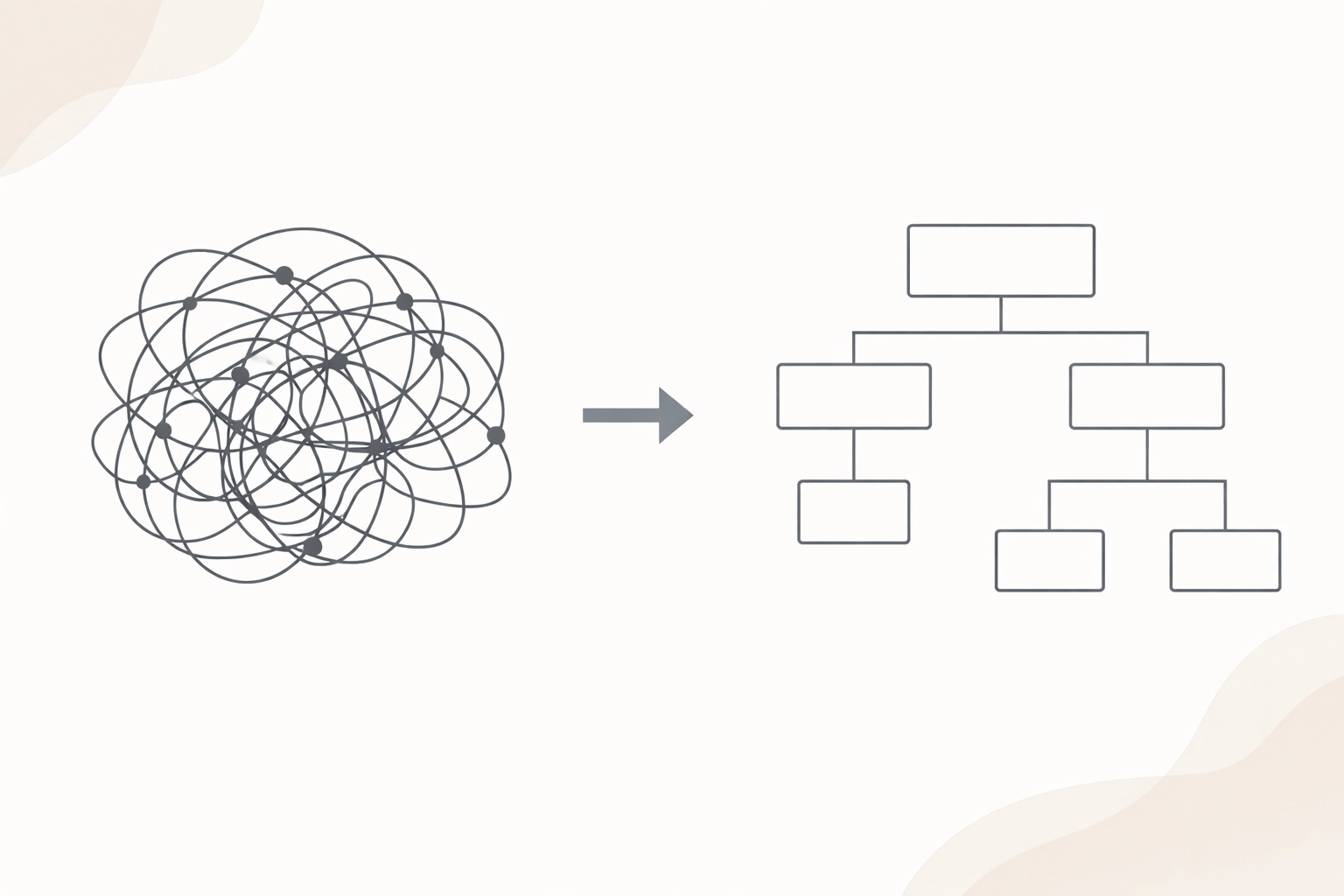
An audit does one thing really well: it turns your gut feeling into data. We walk through your entire operation, scheduling, dispatch, field workflows, billing, inventory, reporting, and map out where the bottlenecks actually are. Not where you think they are. Where they actually are.
This matters because the thing that's driving you crazy might not be the thing costing you money. You might be obsessing over your scheduling software when the real problem is that your techs don't have the right information before they leave the shop. Or that your dispatch team is manually entering data that should've been captured at the point of sale.
The audit finds that stuff. And it keeps you from wasting five figures on the wrong fix.
What You Actually Get for $1,000
Let's talk about the price. A thousand bucks sounds like a lot when you're just trying to figure out what's going on. But here's how it works:
You pay $1,000 upfront for the audit. We spend a week (sometimes more) diving into your operations. We interview your team. We watch your workflows in real time. We document every handoff, every manual step, every place where information gets lost or duplicated.
At the end, you get a full breakdown:
- Where your biggest inefficiencies are
- What they're costing you (in time, rework, and lost revenue)
- Which fixes deliver the highest ROI
- A prioritized roadmap for what to tackle first
And here's the kicker: if you move forward with the build, that $1,000 gets credited back to your project.
So it's not a sunk cost. It's a deposit on clarity.

Even if you decide not to move forward with us, you walk away with a clear understanding of what needs fixing and why. That's worth something. That's worth a lot, actually. Because now you're not guessing. You're making decisions based on real data about your real operation.
Why Mapping Before Building Saves You Money
Here's a scenario that plays out all the time:
A plumbing company buys a new dispatch system because their current one "doesn't work." They spend $15,000 on setup and training. Six months in, they realize the problem wasn't the dispatch system, it was that their CSRs weren't capturing the right customer information upfront. So now they've got a fancy dispatch tool that's still getting fed bad data.
Now they're stuck. They can't justify another software purchase. But they also can't fix the root issue without admitting they made the wrong call. So they limp along, frustrated and out $15,000.
This is what happens when you skip the audit.
The audit forces you to slow down and map the territory before you start building. It answers the questions that save you from expensive mistakes:
- What's actually causing the delay?
- Where is information getting lost?
- Which manual processes could be automated?
- What's the logical order of operations to fix this?
When you know the answers, you build the right thing. And when you build the right thing, it works. It sticks. It pays for itself.
The Real Cost is Building Blind
Let's do some quick math. Say you're running a 10-truck HVAC operation. Your average dispatch bottleneck costs you about 30 minutes per day across your fleet. That's 5 hours of lost productivity. At $150/hour billed time, you're losing $750 a day. Over a month, that's $22,500 in revenue you're not capturing.
Now imagine you throw $20,000 at a new scheduling system without diagnosing the real issue. If the problem isn't scheduling, if it's actually a handoff breakdown between your CSRs and dispatchers, you just spent $20,000 and you're still losing $22,500 a month.
That's a $40,000 mistake in the first month alone.
An audit costs $1,000 and tells you exactly where that bottleneck is. Maybe it's scheduling. Maybe it's not. But now you know. And you can fix the right thing.

This is why the audit isn't an expense. It's insurance against bad decisions.
What Happens During the Week
You might be wondering what actually goes down during an audit week. Fair question. Here's the short version:
Day 1–2: We interview your team. CSRs, dispatchers, techs, admins, everyone who touches the workflow. We're looking for pain points, workarounds, and the stuff people do manually because "that's just how we've always done it."
Day 3–4: We observe your workflows in real time. We sit in on dispatch. We watch how jobs get assigned. We see how information flows (or doesn't flow) from the office to the field and back.
Day 5: We map it all out. Every step. Every handoff. Every place where things break down or slow down. Then we rank the issues by impact and effort.
By the end of the week, you've got a document that shows you exactly where your operation is leaking time and money, and a clear plan for how to plug the leaks.
The Build That Follows
If you decide to move forward with the build, that $1,000 audit credit kicks in. And more importantly, the build is informed by real data. We're not guessing what you need. We know.
Maybe it's a custom integration between your ServiceTitan and your inventory system. Maybe it's a workflow automation that eliminates three manual handoffs. Maybe it's a dashboard that gives you real-time visibility into tech utilization.
Whatever it is, it's the right thing. Because we mapped it first.

And because we mapped it first, the build goes faster. There's less trial and error. Fewer pivots. No "wait, that's not what we meant" moments halfway through. The roadmap is clear, the priorities are set, and everyone knows what success looks like.
Before You Buy Another Tool
Here's the question to ask yourself: Do you actually know what's broken? Not "things feel chaotic." Not "we need better systems." But do you know, specifically, where the breakdown is happening and what it's costing you?
If the answer is no, don't buy another tool. Don't hire another consultant. Don't throw more money at the problem.
Start with the audit. Map the mess. Then build the fix.
It's the most profitable thousand bucks you'll spend this year.
Ready to map the mess? Our $1,000 audit gives you clarity, a roadmap, and a credit toward the build. Let's figure out what's actually broken: then fix it. Learn more about our Systems Audit.