
February 17, 2026 | By Penny
You've heard it before: "We need better systems." But when you're running an HVAC, plumbing, or electrical business, "better systems" usually means more upfront cost, more training headaches, and a three-month waiting period before you see any return.
What if your systems could fund themselves? Not in some theoretical, long-term ROI sense: but in measurable ways that show up in your bank account within weeks.
That's the core of the Sentric Performance Model. It's built around one simple principle: the people who use your systems should directly benefit when those systems perform well. When incentives align, adoption goes up. When adoption goes up, results compound. And when results compound, the system pays for itself.
What Makes a System "Self-Paying"?
Most consulting engagements follow a familiar pattern: you pay upfront, implement the solution, and hope it works. The consultant gets paid regardless of whether your dispatch times improve or your technicians actually use the new CRM.
A self-paying system flips that model. Instead of billing for hours or deliverables, the cost is tied to measurable performance gains. If your average job completion time drops by 20%, your consultant gets a percentage of the money you save. If your lead conversion rate climbs from 30% to 45%, they share in the new revenue those extra jobs generate.
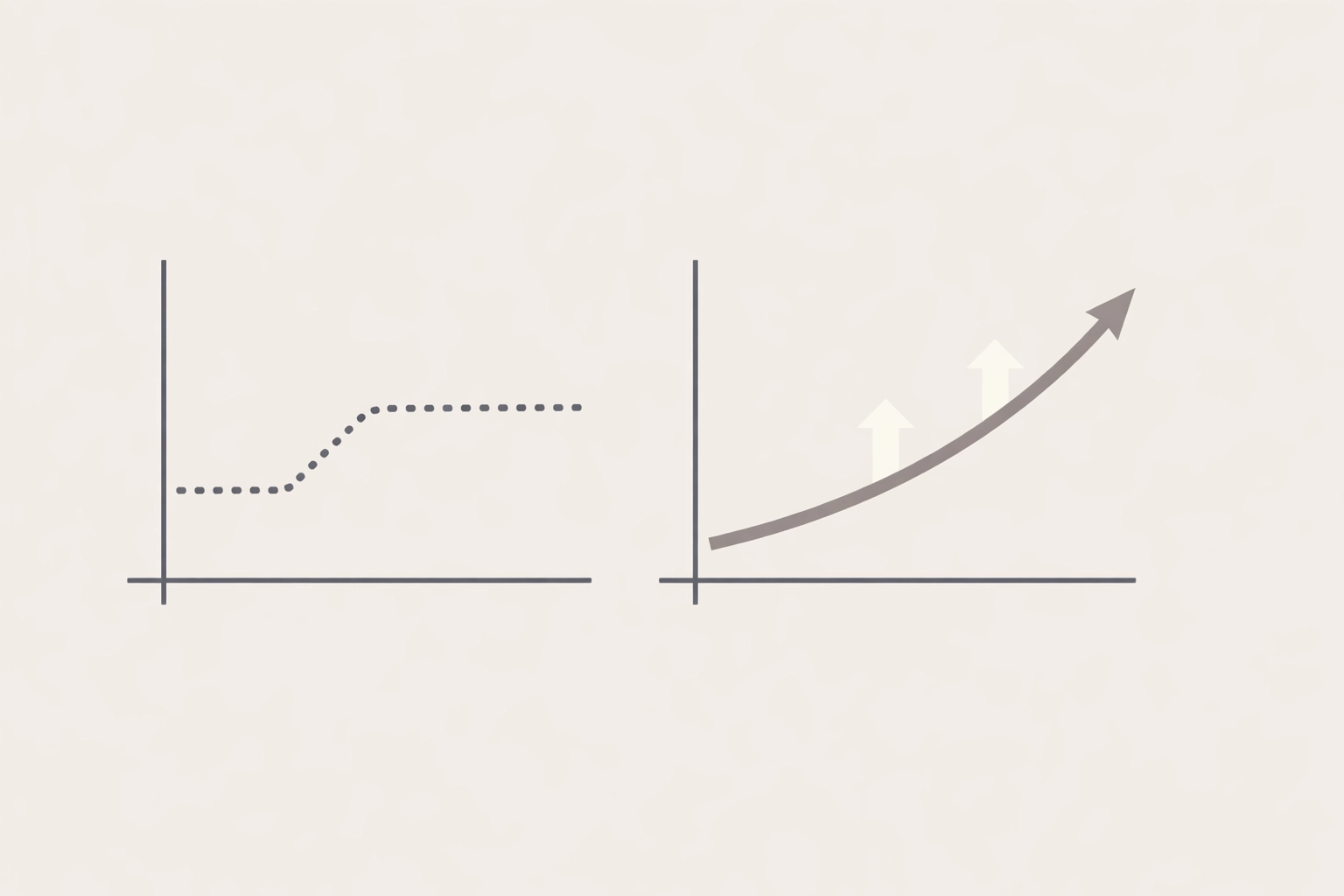
This isn't charity. It's alignment. When your systems partner only wins if you win, they stop focusing on "best practices" and start focusing on what actually moves your numbers.
For home service businesses, this matters even more. You're not selling software or widgets: you're dispatching real people to real homes. Every inefficiency costs you in fuel, labor, and lost appointments. A system that pays for itself isn't just financially smart; it's operationally necessary.
The Share Phase: Where the Model Comes Together
The Sentric Performance Model breaks down into three phases: Audit, Build, and Share. Most consulting stops after Build. You get your new workflow, your dashboard, your SOPs: and then you're on your own.
The Share phase is different. It's where the partnership becomes a performance contract.
Here's how it works in practice:
1. Baseline Metrics Are Established
Before any system goes live, we document your current performance. For an HVAC company, that might be:
- Average dispatch-to-arrival time: 47 minutes
- Daily jobs completed per technician: 4.2
- Lead response time: 6 hours
These aren't aspirational. They're real numbers pulled from your existing tools: spreadsheets, QuickBooks, whatever you're using today.
2. Improvement Targets Are Set
Once the baseline is clear, we agree on realistic improvement targets. Not pie-in-the-sky goals, but achievable gains based on what similar businesses have done:
- Dispatch-to-arrival time: 32 minutes (15-minute improvement)
- Daily jobs per tech: 5.1 (0.9 additional jobs)
- Lead response time: 45 minutes (5+ hour improvement)
These targets become the benchmark for the Share phase.

3. Performance Gains Are Measured Monthly
Every 30 days, we compare current performance to the baseline. If dispatch times dropped, we calculate the hours saved. If jobs per tech increased, we calculate the revenue gained. If lead response improved, we track the conversion lift.
The math is straightforward. If your five-truck HVAC operation goes from 4.2 jobs per tech to 5.1 jobs per tech, that's an extra 4.5 jobs per day. At $450 per average service call, that's an additional $2,025 in daily revenue: or roughly $40,500 per month.
4. Gains Are Split
Here's where the "Share" happens. Instead of paying a flat retainer, you pay a percentage of the documented gain. Typical splits range from 15% to 30%, depending on the complexity of the system and the level of ongoing support required.
Using the example above: if your monthly gain is $40,500 and the agreement is a 20% share, you'd pay $8,100 for that month. You keep $32,400. The next month, we measure again. If performance holds, you pay again. If it dips, the payment adjusts: or disappears entirely.
You're never paying for systems that don't work. You're only paying for results you can see.
Why Aligned Incentives Change Everything
The traditional consulting model creates a misalignment problem. The consultant wants to bill hours. You want to save time. The consultant wants to build complex systems that showcase their expertise. You want simple tools your team will actually use.
Performance-based sharing removes that tension. Your systems partner now has a vested interest in making sure:
- Adoption is high: If your technicians don't use the dispatch app, job completion times won't improve: and neither will the payout. Suddenly, user-friendly design matters.
- Training is effective: If your office staff can't navigate the CRM, lead response times won't drop. Now there's an incentive to create training that actually sticks.
- Systems stay maintained: If automations break and nobody fixes them, performance will slide: and so will the monthly share. Ongoing support becomes part of the deal.

For home service businesses, this alignment is critical. You can't afford to implement a system, pay $15K, and then discover six months later that nobody's using it. The Share phase ensures that your systems partner is still in the game, still optimizing, still making sure the numbers keep moving in the right direction.
What This Looks Like in Real Operations
Let's say you run a plumbing company with eight techs. Your biggest bottleneck is dispatch: jobs get delayed, customers complain, and your team spends half their day on the phone trying to figure out who's going where.
You bring in a consultant using the Sentric Performance Model. After the Audit phase, they identify that your average dispatch delay (from customer call to tech arrival) is 52 minutes. The Build phase creates a centralized dispatch dashboard, automated job routing, and real-time tech location tracking.
Once the system goes live, the Share phase kicks in. Within the first month, dispatch delays drop to 34 minutes. That 18-minute improvement means your techs complete an average of 0.7 additional jobs per day. Over a month, that's 140 extra jobs. At $380 per average service call, that's $53,200 in new monthly revenue.
Under a 20% share agreement, you'd pay $10,640 for that month. You keep $42,560.
But here's the key: because the consultant only gets paid when the system performs, they're actively monitoring dispatch metrics, troubleshooting bottlenecks, and adjusting workflows in real time. You're not waiting for a quarterly check-in. You're getting continuous optimization because that's how they earn their share.
When Systems Stop Performing, So Does the Payment
Not every system improvement is permanent. Sometimes performance dips because a new tech joins the team and hasn't been trained. Sometimes a software update breaks an integration. Sometimes demand surges and your old bottlenecks resurface.
In a traditional consulting model, you'd be stuck. You already paid. The consultant has moved on to the next client.
In the Share phase, performance dips mean payment dips. If your dispatch times creep back up to 50 minutes, there's no gain to share: so there's no payment. But more importantly, your systems partner is incentivized to jump back in and fix the problem. Their revenue depends on your performance staying consistent.
This creates a long-term partnership, not a one-time transaction. As your business grows, your systems evolve. As your systems evolve, the Share phase adapts. You're never locked into a static solution.
The Bottom Line: Systems Should Fund Themselves
Most business owners avoid systems upgrades because they're expensive, disruptive, and risky. You pay upfront, hope for the best, and cross your fingers that your team actually uses what you bought.
The Sentric Performance Model removes that risk. You only pay when the system proves itself. You only invest when the results are measurable. And you only keep paying as long as the performance holds.
For home service businesses operating on tight margins, this isn't just a better payment structure: it's the difference between staying stuck and actually scaling. Systems that pay for themselves aren't a luxury. They're a competitive advantage.
Ready to see what your operations could look like with aligned incentives? Start with a systems audit and let's map your baseline. No upfront cost. No long-term contract. Just measurable performance and shared results.
Sentric Group | Business Operations Consulting for Home Service Companies