
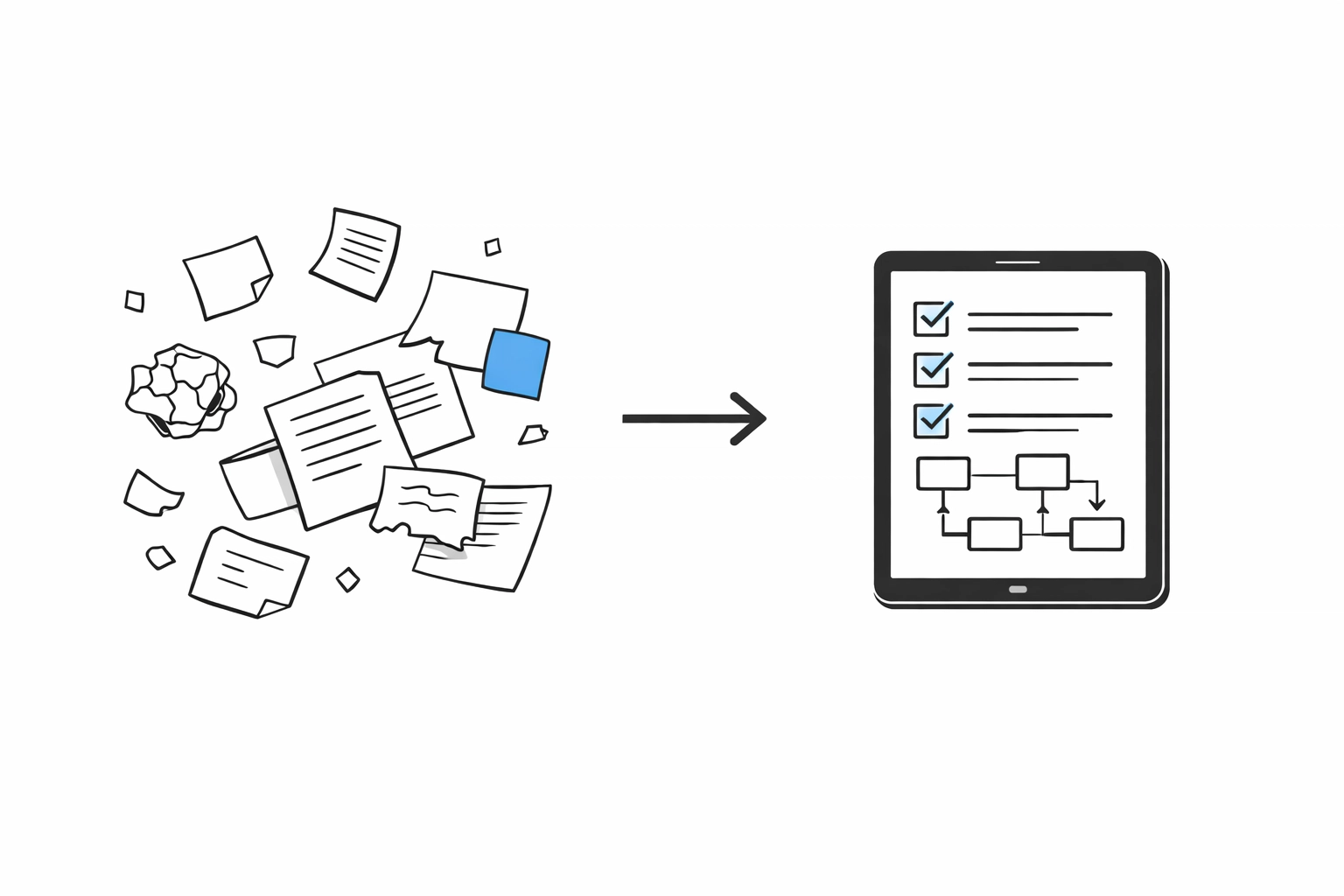
You know the drill. Your lead electrician just called in sick, and suddenly nobody knows which job to start first. Your newest apprentice is asking questions you've answered seventeen times. And somewhere in the truck, there's a crumpled napkin with job notes that should've been entered into… well, whatever system you're supposed to be using.
If you're running your electrical business on memory, sticky notes, and the occasional group text, you're not alone. But here's the thing: the companies scaling past $500K aren't smarter than you: they just stopped keeping their operations inside their heads.
Standard Operating Procedures aren't bureaucratic busywork. They're the difference between you being trapped in every decision and your team running jobs without calling you at 6 PM on a Friday.
Why Electricians Resist SOPs (And Why That's Costing You)
Let's be honest: most electrical contractors didn't get into the trade to write documentation. You got into it because you're good with your hands, you solve problems, and you like the independence.
But here's what happens without documented systems:
Every new hire becomes a month-long training project. You spend hours explaining how you quote residential panel upgrades, how you handle permit pulls, how you organize material orders. Then they quit or you fire them, and you start over.
Quality becomes inconsistent. One guy does rough-ins your way. Another does them his way. The customer experience depends entirely on who shows up.
You can't take a vacation. Because if you're not there to answer questions, make judgment calls, and put out fires, the whole operation stalls.
The electricians breaking through the $1M revenue mark? They've figured out how to clone their expertise without cloning themselves. That's what SOPs do.
The 48-Hour SOP Sprint: Where to Start
You don't need a 200-page operations manual. You need documentation for the five processes that eat most of your time. Here's how to build them fast:
Day 1 Morning: Capture Your Customer Intake Process
Pull up your last 10 phone calls or inquiry forms. Write down every question you ask, every piece of information you collect, and every next step you take. Include:
- How you qualify leads (residential vs commercial, project size, urgency)
- What information you need before quoting
- How quickly you promise to respond
- Who handles follow-up and when
This single document eliminates 90% of "What do I tell this customer?" questions.
Day 1 Afternoon: Document Your Job Kickoff Checklist
From the moment you win a project to the moment your crew arrives on-site, what has to happen? Most electrical businesses lose money in this gap: forgotten permit applications, missing materials, unclear scope with the client.
Write it down:
- Deposit collection and paperwork
- Material ordering timeline
- Permit submission process
- Pre-job client communication
- Site prep requirements
Your goal: any crew leader should be able to prepare for a new job without asking you a single question.
Day 2 Morning: Standardize Your Quality and Safety Protocols
This is where you protect your reputation and your license. Document your non-negotiables:
- Inspection checklist before calling a job complete
- Lock-out/tag-out procedures
- How you handle code violations found on existing work
- Photo documentation requirements
- Cleanup standards
When your newest apprentice knows exactly what "job complete" looks like, you stop getting callbacks.
Day 2 Afternoon: Map Your Invoicing and Collection Process
How do jobs become payments? Too many electrical contractors finish great work and then fumble the close. Document:
- When you invoice (end of day, end of week, upon completion)
- What payment methods you accept
- How you handle payment plans
- Your follow-up sequence for overdue invoices
- When you involve collections
This process alone can cut your days-to-payment in half.
From Paper to Platform: Making SOPs Actually Work
Here's where most electrical contractors fail: they write down their processes once, save them to a Google Doc nobody can find, and wonder why nothing changes.
The documentation is 30% of the work. The implementation is 70%.
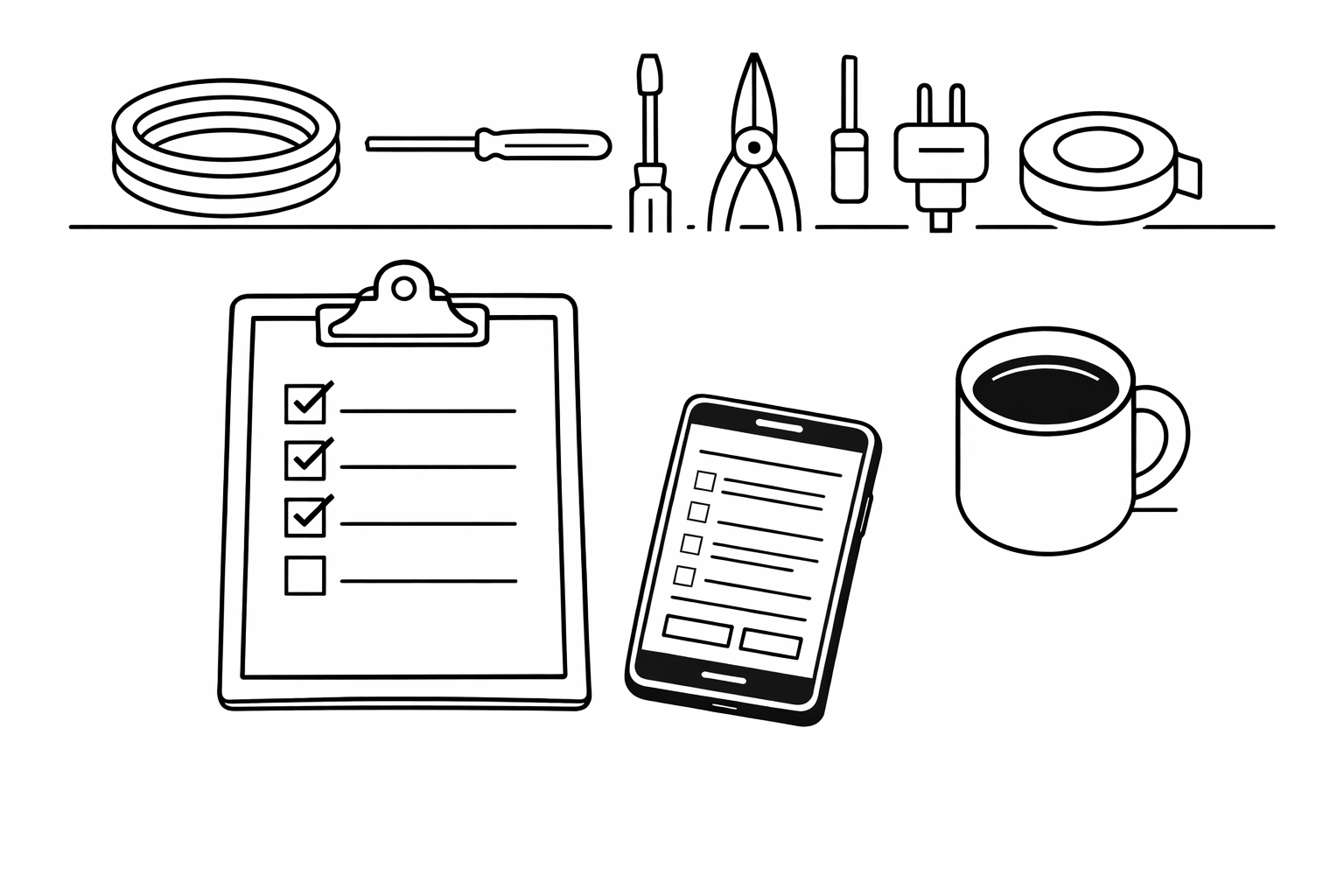
Your SOPs need to live where your team actually works. That means:
- Checklists built into your field service software
- Job templates that auto-populate the right steps
- Mobile-accessible guides that apprentices can pull up in the truck
- Automated reminders that trigger when steps get skipped
When your dispatch system automatically reminds your crew to take before/after photos, you don't need to remember to remind them. When your invoicing software won't close a job until the quality checklist is complete, you don't need to chase down paperwork.
The electrical businesses seeing that 75% reduction in planning time? They've connected their written processes to their digital tools. The system enforces the standard: not the owner.
Training Your Team Without the Repeat Explanations
Once your SOPs exist, onboarding transforms. Instead of shadowing you for weeks, new hires get:
- A written reference for every standard procedure
- Video walkthroughs of your most critical processes (5-minute phone recordings work fine)
- Checklists they can follow independently
- Clear criteria for what "doing it right" looks like
Your job shifts from teaching every detail to reviewing their work against the standard. When someone asks, "How do we handle X?": you point them to the SOP. If the SOP isn't clear, you improve it once instead of explaining it a hundred times.
One electrical contractor we worked with calculated that SOPs cut his per-employee training time from 6 weeks to 10 days. Same quality standards. Way less of his time.
What Changes When Your Systems Run Without You
Three months after documenting your core processes, your business starts to feel different:
Monday mornings stop being chaos. Your crew knows which jobs to start, what materials they need, and what the priorities are: because the dispatch system follows the SOP you built.
Your phone stops ringing with questions you've already answered. When the answer is in the system, your team checks the system first.
Quality complaints drop. Because "how we do things" isn't tribal knowledge anymore: it's documented, trained, and enforced by your processes.
You can hire faster. Because you're not looking for someone who already knows your methods: you're looking for someone who can learn them from your SOPs.
And here's the big one: you can leave for a week without the business imploding. Your systems keep running because they're not dependent on you remembering everything.
The Real ROI: Planning Time That Disappears
Here's what that 75% reduction in planning time actually looks like:
Before SOPs: You spend 90 minutes every morning figuring out which crew goes where, what materials they need, what the priorities are, and answering the inevitable questions when something doesn't go as planned.
After SOPs: Your dispatch process is standardized. Material needs are auto-calculated from job templates. Crews follow documented protocols when problems arise. Your morning planning drops to 20 minutes: and most of that is reviewing, not deciding.
That's 70 minutes back every single day. Over a year? That's 250 hours: more than six work weeks: of your time reclaimed.
What could you do with an extra six weeks? Probably close enough new business to add another truck.
Your Next 48 Hours
You don't need to systematize everything at once. You need to document the five processes that create the most friction. If you tackle the four areas we outlined: customer intake, job kickoff, quality protocols, and invoicing: you'll eliminate 80% of the repeated questions and planning chaos.
Start with pen and paper. Record yourself explaining the process to a new hire. Write down what you just said. Clean it up. Put it somewhere your team can access it.
Then do the next one.
Before you hire your next electrician, before you bid on that commercial job that'll stretch your capacity, before you add truck number four: get your operations out of your head and into a system that runs without you.
Because the electrical contractors scaling past seven figures aren't juggling more complexity in their heads. They built systems that handle the complexity for them.
Ready to turn your operational chaos into repeatable systems? Sentric Group specializes in helping electrical contractors document, automate, and scale their core processes: without the overwhelm. Schedule a systems audit and we'll show you exactly where SOPs will save you the most time.