
You've hit the point where ServiceTitan or Housecall Pro runs your dispatch, but your revenue forecast lives in a Google Sheet. Your inventory sync breaks weekly. Your estimators are copying quotes between three different systems. And your QuickBooks integration? It's technically working, but it's not doing what you actually need.
Standard integrations got you this far. But somewhere between 8 trucks and 20, the seams start showing. This is where most high-growth HVAC teams hit a wall: not because their platform failed, but because the out-of-the-box connections weren't built for their specific workflow.
That's where custom bridges come in.
When Standard Integrations Aren't Enough
ServiceTitan ships with 70+ native integrations. Housecall Pro connects to most of the tools you'd expect. On paper, these platforms integrate with everything. In reality? They integrate with the most common use cases for the most common customers.

Alt text: Diagram showing ServiceTitan at center with standard integrations branching out, with several gaps highlighted in neutral gray tones
Here's what breaks down as you scale:
Your CRM wants data ServiceTitan doesn't send. You need customer lifetime value calculations that factor in seasonal maintenance contracts, part margins, and referral source: but the native Salesforce connector only pushes job status and invoice totals.
Your estimating tool doesn't talk to dispatch. Your field estimators use a custom pricing calculator built around your specific equipment catalog and local supplier pricing. ServiceTitan has no idea it exists, so your CSRs are manually re-entering estimates when they convert to jobs.
Your financial dashboards are 48 hours behind. QuickBooks sync runs once nightly. By the time your morning report pulls, yesterday's revenue is already stale. You're making decisions on old data because your two systems aren't talking in real time.
Your inventory system has its own rules. You use a warehouse management platform that tracks consignment inventory, supplier rebates, and van stock levels in ways ServiceTitan's inventory module can't replicate. Every purchase order becomes a manual reconciliation nightmare.
None of this is a platform failure. It's a scaling problem. Standard integrations are built for 80% of users. You're in the 20% that needs something custom.
What Custom Bridges Actually Do
A custom bridge is middleware: a small piece of software that sits between two platforms and translates data in exactly the way your business needs it.
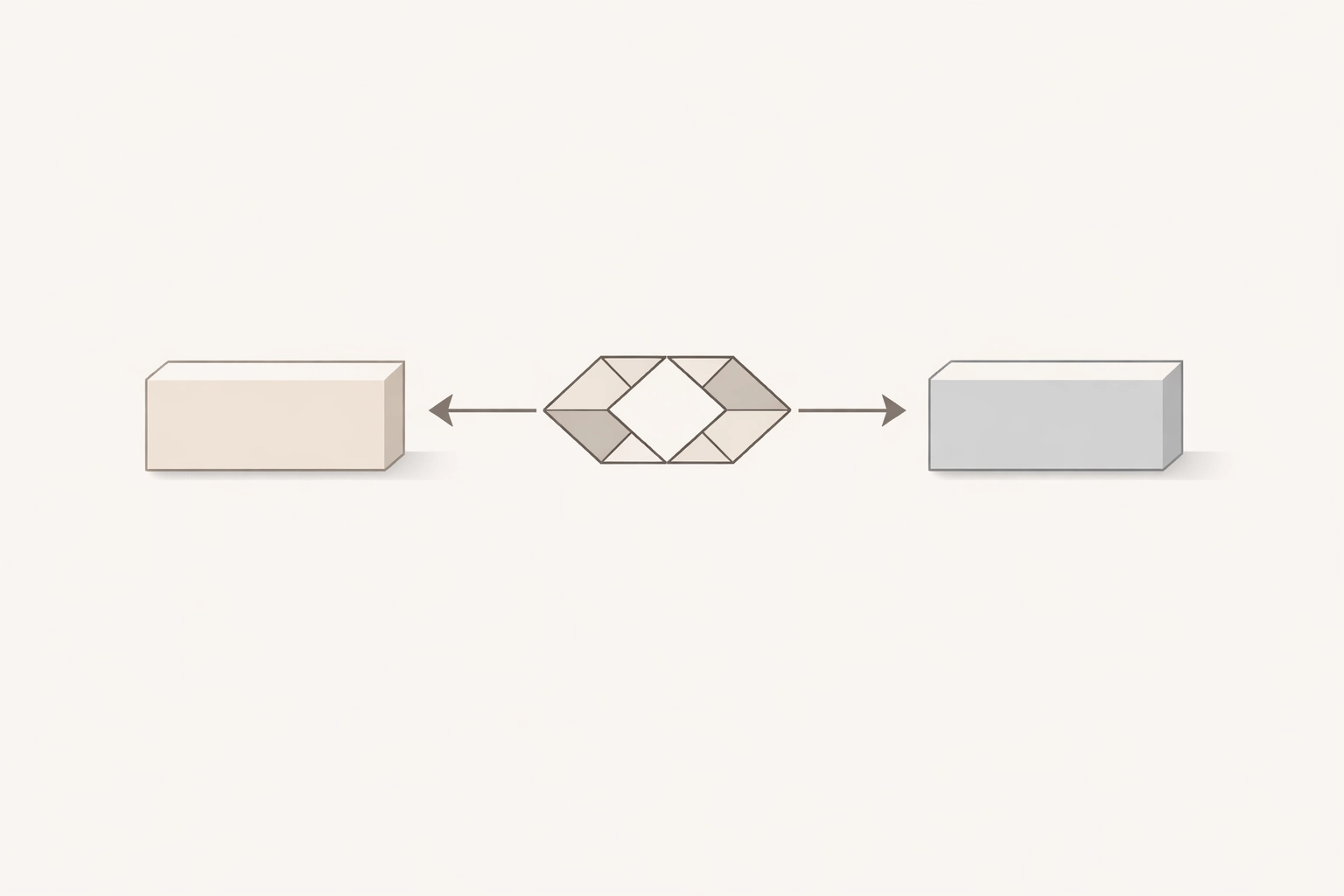
Alt text: Simple flowchart showing custom bridge connecting ServiceTitan API to third-party tool with bidirectional data flow, rendered in neutral beige and gray palette
Think of it like this: ServiceTitan speaks English. Your custom estimating tool speaks Spanish. The native integration is a phrase book: it handles basic conversations, but the moment you need something nuanced, you're stuck. A custom bridge is a live translator who understands both languages and the specific context of your business.
Here's what changes:
Real-time data sync. Instead of nightly batch jobs, your bridge can push and pull data every 60 seconds. Your dashboard updates live. Your CRM sees job status changes as they happen. Your warehouse system adjusts van stock the moment a tech completes an install.
Custom field mapping. You decide what data moves, how it's formatted, and where it lands. Need to pull technician GPS coordinates into your routing software? Done. Want to push customer satisfaction scores from your survey tool into ServiceTitan customer records? Built.
Conditional logic. Bridges can be smart. Only sync invoices over $5,000 to your enterprise accounting system. Automatically flag jobs with specific equipment types for follow-up campaigns. Trigger warehouse alerts when parts hit reorder thresholds based on seasonal demand patterns.
Two-way workflows. Data doesn't just flow one direction. Your inventory system can push restocking alerts into ServiceTitan. Your CRM can trigger dispatch priority changes. Your estimating tool can auto-create jobs without CSR intervention.
This isn't about replacing ServiceTitan. It's about making it the hub it's supposed to be: with every spoke built for your operation.
Real Use Cases for High-Growth HVAC Teams
Let's get specific. Here's what custom bridges look like in practice:

Alt text: Split-screen mockup showing ServiceTitan interface on left and custom financial dashboard on right with live data sync indicators, neutral color scheme
The Maintenance Contract Bridge
You sell annual maintenance plans through a third-party financing platform. When a customer signs up, you need:
- Their financing terms pushed into ServiceTitan as custom fields
- Automatic job creation for quarterly service visits
- Contract renewal alerts sent to your CRM 45 days before expiration
- Revenue recognition adjustments sent to QuickBooks based on accrual schedule
A custom bridge handles all of this automatically. Your CSRs never touch it. The contract gets signed, and your systems sync within minutes.
The Dynamic Pricing Bridge
Your pricing changes based on real-time supplier costs, local permit fees, and seasonal demand. You built a custom pricing engine that factors in:
- Current wholesale costs from three regional suppliers
- Technician skill level and drive time
- Time-of-day multipliers for emergency calls
- Customer-specific discounts based on contract tier
Your bridge pulls job details from ServiceTitan, runs the calculation, and pushes the quote back: accurate, instant, and consistent across all 23 techs.
The Inventory Sync Bridge
You run a hub-and-spoke warehouse model with three locations and 15 service vans. Your custom inventory platform tracks:
- Real-time van stock by tech
- Cross-location transfers
- Consignment inventory with delayed billing
- Supplier-specific rebate tracking
Your bridge syncs part usage from ServiceTitan completed jobs, updates van inventory, triggers restock alerts, and adjusts your cost-of-goods-sold in QuickBooks: all without a warehouse manager lifting a finger.
The Build Phase Approach
Here's how most high-growth HVAC teams approach this:
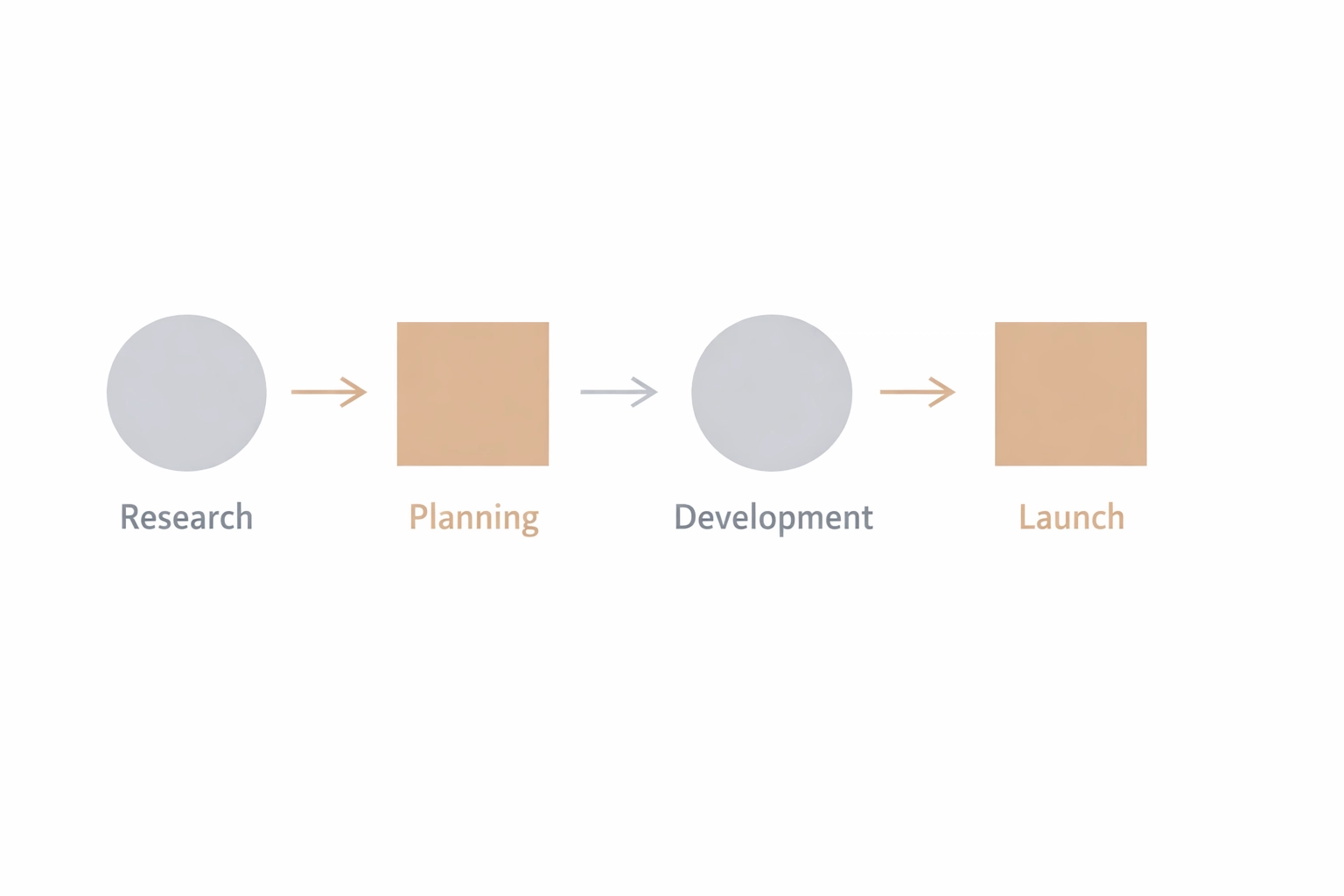
Step 1: Map the friction points. Where are your CSRs, dispatchers, or techs manually re-entering data? Where are your reports wrong because systems don't agree? Where are decisions delayed because data isn't available?
Step 2: Pick the highest-impact connection. You don't need to build everything at once. Start with the one integration that's costing you the most time or money. For most teams, that's either CRM-to-dispatch sync or inventory-to-accounting flow.
Alt text: Clean workflow diagram showing a single custom bridge implementation process from audit to deployment, using soft gray and tan tones
Step 3: Build a minimum viable bridge. The first version doesn't need to be perfect. Get the core data flowing reliably. A $2,500 build that syncs job completion status into your CRM in real time is infinitely better than a $25,000 fantasy that tries to automate everything.
Step 4: Test under load. Run it with real jobs for two weeks. Watch for edge cases. Make sure it handles errors gracefully when APIs go down or data formats change.
Step 5: Iterate and expand. Once the first bridge is stable, add conditional logic. Build the next connection. Gradually, your platform stack becomes an integrated ecosystem instead of a collection of isolated tools.
The key is treating this like the Build phase it is. You're not implementing software. You're building infrastructure. It requires planning, testing, and iteration: but the payoff is a system that actually scales with your team.
The $2,500 Question
Most HVAC teams assume custom integrations cost $50,000 and take six months. In reality, a focused bridge between two APIs: ServiceTitan to your CRM, Housecall Pro to your inventory system: can be built for $2,500 to $5,000 and deployed in two to three weeks.
The difference is scope. You're not building a enterprise data warehouse. You're solving one specific, high-friction workflow problem.
And once you've done it once, the second bridge is faster. The third is routine. Six months later, your operations team wonders how you ever ran without them.
Is Your System Ready to Scale?
You've built a strong business. Your trucks are running, your techs are booked, and your revenue is climbing. But if your systems are holding you back: if you're still copying data between platforms, if your reports don't match, if your team is spending hours on work a bridge could do in seconds: it might be time to build.
Custom bridges aren't for every HVAC company. But if you're past 10 trucks, planning for 30, and hitting walls your platform wasn't designed to solve? This is the infrastructure play that lets you scale without chaos.
Sentric Group specializes in operational systems for growing home service businesses: including custom integrations, workflow automation, and the Build-phase infrastructure that turns platforms into scalable systems. If your tech stack needs connective tissue, let's talk.