
You've invested in ServiceTitan. You've got QuickBooks running. Maybe you added a CRM and a project management tool. Your stack looks solid on paper.
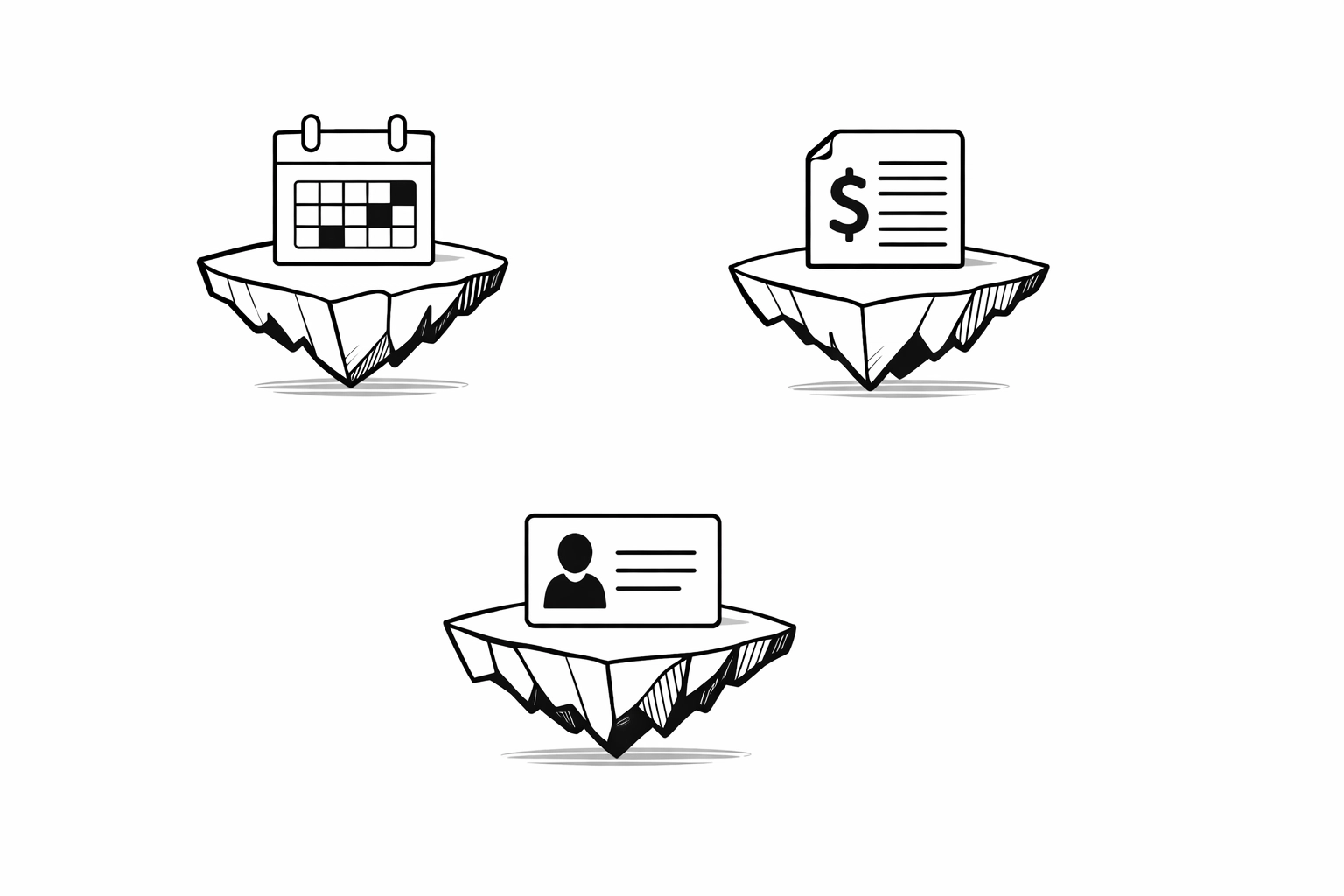
So why does it feel like you're still doing everything twice?
Most electrical contractors think automation means buying more software. But here's what nobody tells you: the gaps between your tools are costing you more than the manual processes ever did.
We've audited dozens of electrical businesses running 5+ trucks, and the pattern is always the same. The tools work fine individually. But the handoffs? Those are where profits disappear.
Let's break down the seven workflow failures that drain electrical contractor margins: and what actually fixes them.
1. Data Lives in Silos (And Dies There)
Your field service software knows when a job is complete. Your accounting system knows when an invoice goes out. Your CRM knows when a customer calls back.
But none of them talk to each other.
The result? Your dispatcher manually re-enters job details into QuickBooks. Your office manager copies customer notes from ServiceTitan into HubSpot. Your estimator rebuilds material lists because they're stuck in a closed system.
The Real Cost: An electrician finishing 8 jobs a day creates 8 separate data entry tasks across 3-4 systems. That's 160+ manual transfers per week. At 5 minutes each (being generous), you're burning 13+ hours weekly just moving information that already exists.
2. Duplicate Entries Cascade Into Bigger Problems
Here's how it actually plays out in the field:
A customer calls to schedule a panel upgrade. Your CSR logs it in your dispatch software. Your estimator re-enters the address and details to build a quote. Once approved, someone types it all again into your accounting system. Then again into inventory management to allocate materials.
Four separate entries for one job. Four chances for a typo to send a truck to the wrong address or order the wrong parts.
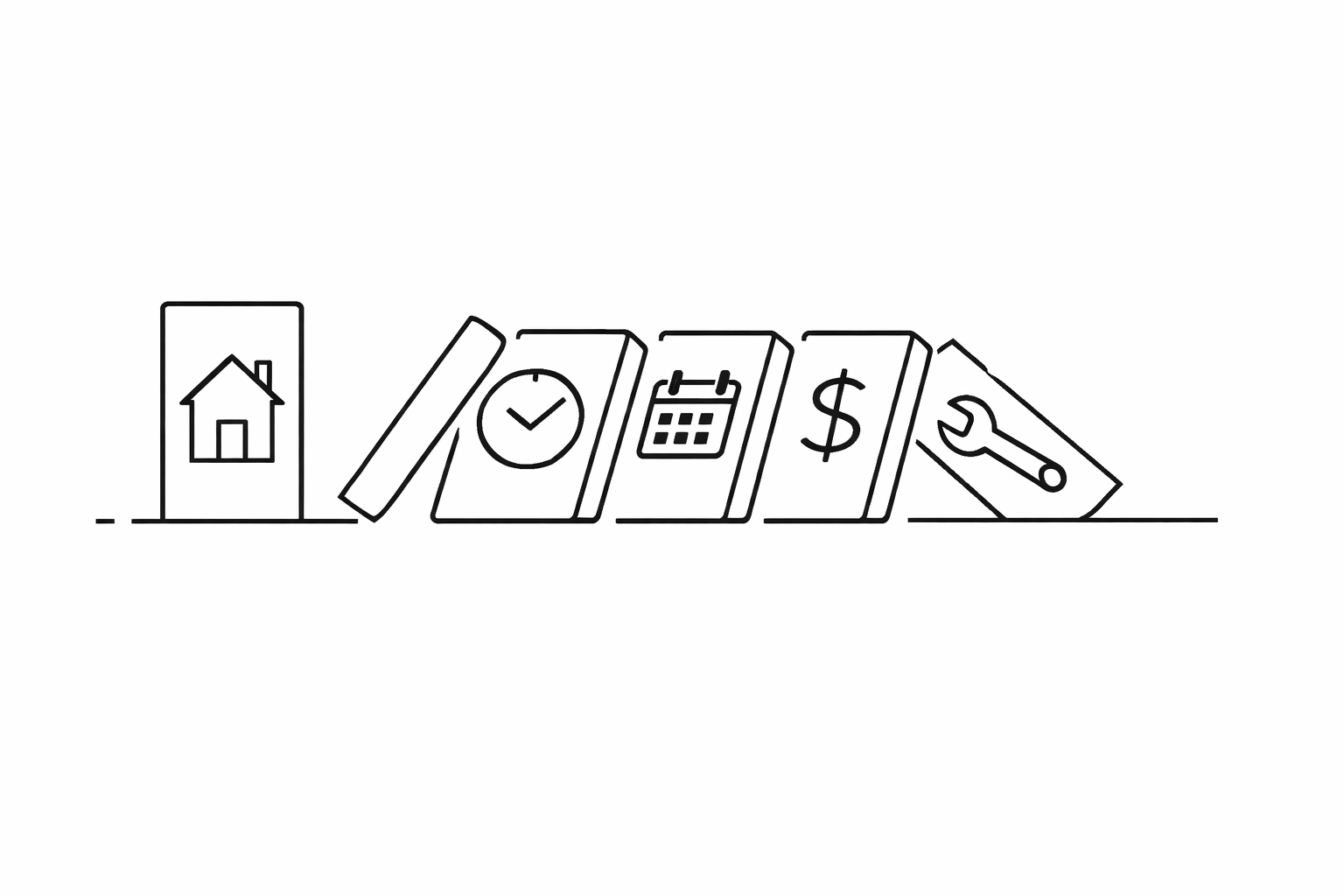
We've seen this create a domino effect: wrong address → missed appointment → rescheduling → delayed payment → cash flow gap → can't order materials for next week's jobs.
One data entry mistake compounds for weeks.
3. Notifications Fall Through the Cracks
Your automation sends alerts. Lots of them. Too many of them.
When a job runs late, ServiceTitan sends a notification. When a customer responds to a text, another notification. When an invoice is due, another alert. When materials arrive, another ping.
Your team has notification fatigue. So they've learned to ignore most of them.
The critical ones: customer waiting longer than promised, technician stuck on a job, payment 60 days overdue: get buried under routine updates about quote requests and automated appointment reminders.
The Fix That Doesn't Work: Adding more notification channels. Now you've got email alerts, Slack messages, SMS pings, and app notifications all delivering the same information. Your team ignores those too.
4. Scheduling Systems Don't Account for Reality
Your scheduling software optimizes routes based on addresses and time slots. Sounds great.
But it doesn't know that:
- Job A always runs 2 hours over because old wiring requires extra troubleshooting
- Technician B takes longer but gets higher customer satisfaction scores
- Customer C pays invoices same-day while Customer D takes 90 days
- Material suppliers close at 4pm, so pickups need to happen before 3:30pm
Your "optimized" schedule sends technicians to jobs they're not equipped for, creates unrealistic timelines, and ignores the business realities that actually impact profitability.
The result? You're efficient on paper and chaotic in practice.
5. Your Invoice Automation Creates Cash Flow Gaps
Automating invoice delivery is table stakes. But electrical contractors often experience 30-60 day payment delays because their automation stops at "send invoice."
Your system doesn't automatically:
- Send payment reminders based on customer payment history
- Flag accounts approaching credit limits before dispatching more work
- Prioritize collection calls based on cash flow needs
- Connect aged receivables to job scheduling (maybe don't send that customer another $8K job when they owe you $12K from 45 days ago)
You've automated the easy part: creating and sending invoices. But the profitable part: actually collecting them strategically: remains manual.
6. Field-to-Office Communication Runs on Screenshots and Phone Calls
Your technicians have tablets. They can log job notes, upload photos, mark tasks complete.
But when something goes wrong: unexpected damage, scope change, customer wants additional work: the process falls apart.
They take photos. Text them to the office. Call dispatch. Wait for approval. Meanwhile, they're standing in a customer's basement burning billable hours.
Why? Because your field service software doesn't connect to your estimating system, which doesn't connect to your approval workflow, which doesn't connect back to the job file.
What should be a 5-minute digital approval process becomes 30 minutes of phone tag, missing context, and frustrated technicians who could be moving to the next job.

7. Your Automation Doesn't Learn or Adapt
This is the big one.
Every automation you've built follows fixed rules. If this happens, do that. When X occurs, trigger Y.
But electrical contracting isn't static:
- Customer preferences change seasonally
- Material costs fluctuate weekly
- Labor availability shifts monthly
- Market demand varies by neighborhood
Your automation keeps running the same playbook regardless of context.
You're still sending the same follow-up sequence to customers who called you versus customers who found you online. Still routing jobs the same way despite learning that morning appointments have 40% higher completion rates. Still ordering materials on the same schedule despite supplier delays being predictable now.
The Missing Piece: Your automation should observe patterns and surface insights. Not just execute tasks, but highlight when the rules need updating.
What Actually Fixes Broken Automation
Here's what we've learned after helping electrical contractors achieve 50%+ throughput increases:
Stop buying more tools. Start building bridges between the ones you have.
Most contractors have 80% of what they need already. ServiceTitan handles dispatch well. QuickBooks manages accounting fine. Their CRM does customer management adequately.
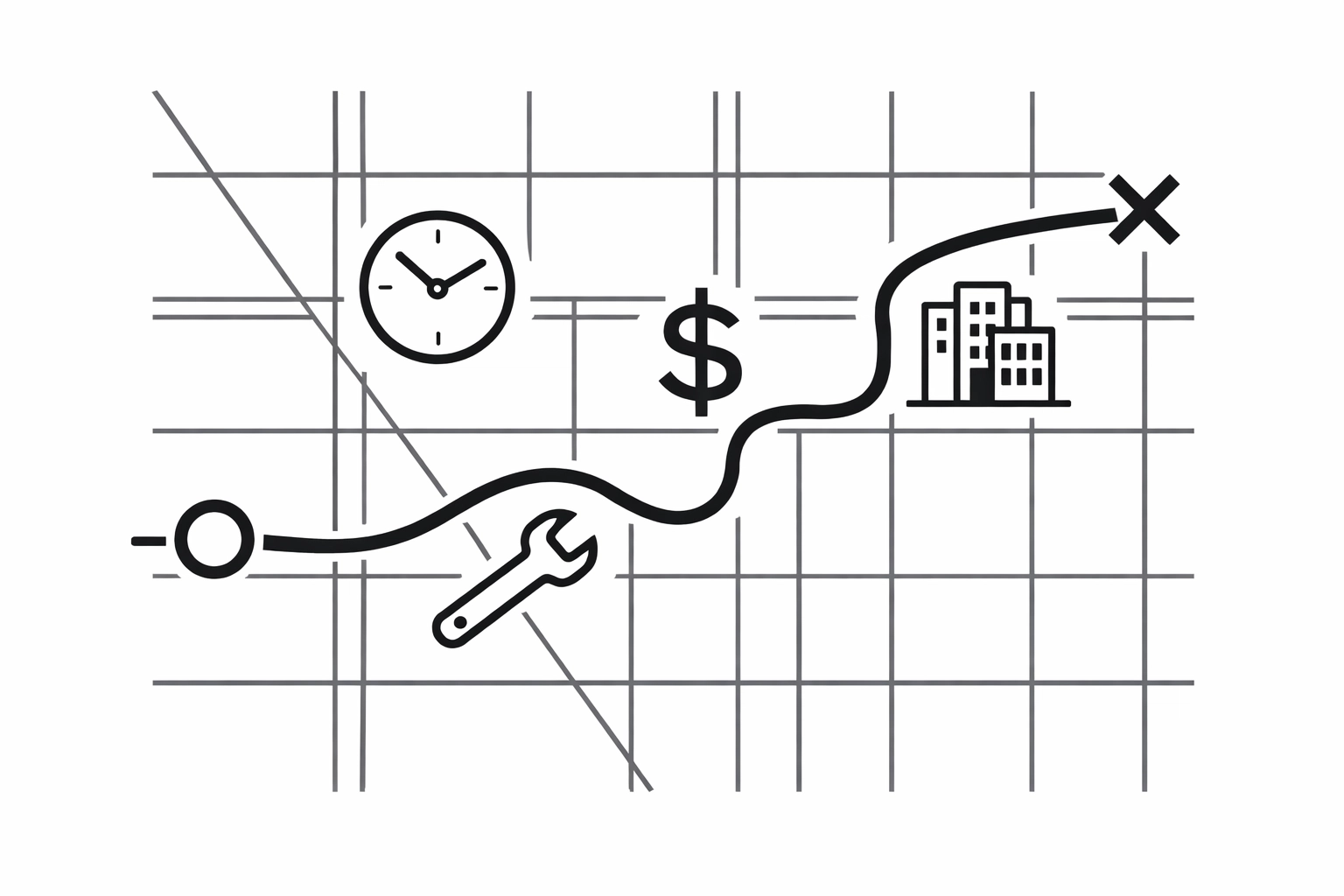
The problem isn't the tools. It's the air gaps between them.
That's where custom software bridges come in: small, purpose-built connectors that:
- Automatically sync data between systems so nothing gets entered twice
- Filter notifications based on urgency and role
- Connect field approvals directly to estimating and accounting
- Track patterns and flag anomalies that fixed rules miss
- Surface the insights buried in your existing data
This isn't about replacing your entire stack. It's about making the stack you already paid for actually work together.
The Tool-Smart Approach
We call it being "tool-smart" instead of tool-happy.
Before adding another platform, ask:
- What specific gap does this fill?
- Does it connect to what we already use?
- Can we solve this by bridging existing tools instead?
Nine times out of ten, a custom connector costs less than another annual software license and delivers more value because it's built exactly for your workflow.
One electrical contractor we worked with was considering a $40K/year workforce management platform. Instead, we built three bridges between their existing systems for a one-time cost of $15K. Solved the same problems. Kept their team in familiar tools. Paid for itself in four months through eliminated duplicate entry time alone.
Your Next Step
Take inventory of where data gets manually transferred between systems in your business. Not where you wish you had more automation: where you're already moving information that exists in one place into another place.
That's your profit leak.
Each manual transfer is an opportunity for a bridge that eliminates duplicate work, reduces errors, and frees your team to do actual electrical work instead of data entry.
You've built a solid electrical business. Your technical skills aren't the problem. Your tools aren't even the problem.
It's the gaps between the tools.
Before you add another platform to your stack, let's look at bridging what you already have. Get a free operations audit and we'll map exactly where your automation is breaking: and what it's costing you.
Published: February 17, 2026
Author: Sentric Group
Category: Operations Consulting for Home Services