
Your plumber finishes a three-hour job. He texts the office. Someone updates the system, maybe. Hours later, someone else creates the invoice. By tomorrow morning, you might send it to the customer. Might.
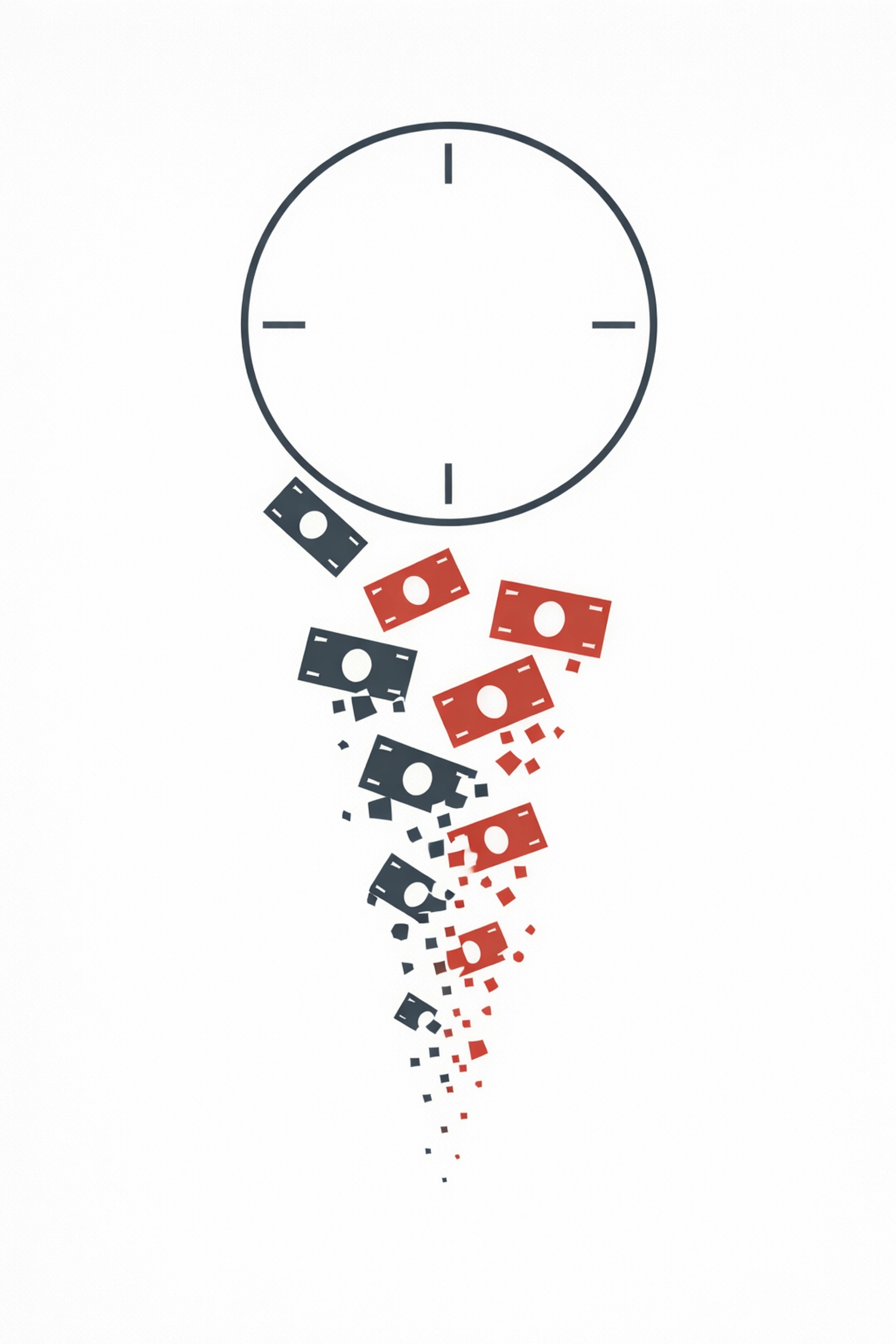
That gap? That's where your profit goes to die.
Most plumbing companies lose between $10K and $30K monthly in this dispatch-to-invoice gap, and they don't even know it's happening. The job's done. The customer's happy. But somewhere between "wrench down" and "invoice sent," money evaporates.
Let's talk about why this happens and how real-time tracking fixes it.
The Invisible Profit Leak
Here's what the gap looks like in practice:
Your tech finishes a water heater replacement at 3 PM. He calls dispatch, mentions he used "extra parts," and heads to the next job. Dispatch scribbles notes. The office manager creates the invoice the next morning based on those notes, but she's guessing on material costs because inventory wasn't updated. The invoice goes out 36 hours after job completion.
The customer pays… eventually. Maybe in two weeks. Maybe in 45 days.
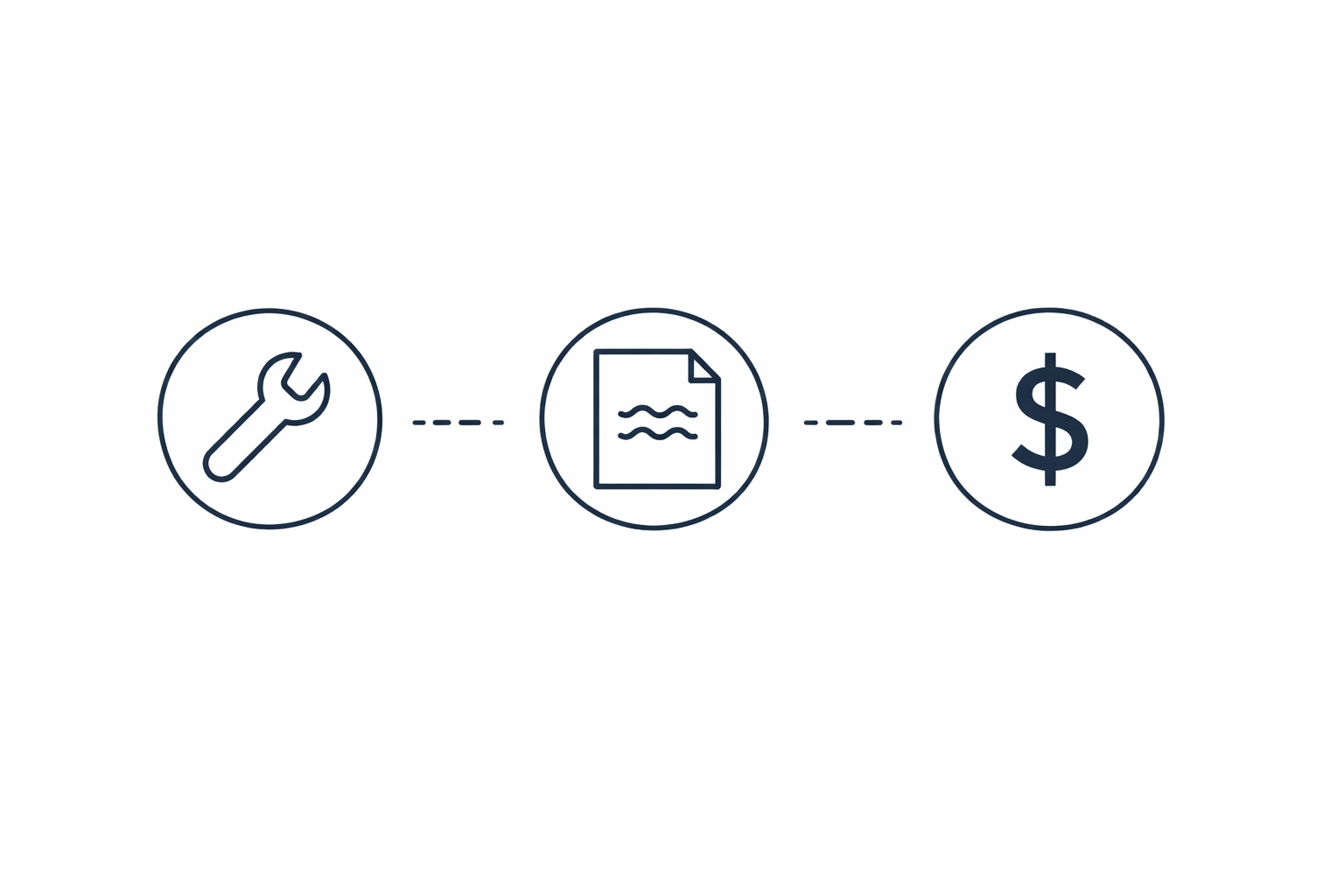
Meanwhile, you're three days into the next week, running five more jobs, and you still don't know if that water heater job was actually profitable. You don't know if your tech took four hours or six. You don't know if the materials cost $300 or $500. You just know the check hasn't cleared.
That's the gap. And it's bleeding you dry.
Why the Gap Exists (And Why It's Getting Worse)
The dispatch-to-invoice gap grows because most plumbing companies run on disconnected systems:
Field techs use one tool. ServiceTitan, Housecall Pro, whatever. They log jobs, but details stay surface-level.
Accounting uses another tool. QuickBooks tracks money, but it's always playing catch-up with the field.
Dispatch uses a third tool. Maybe a whiteboard. Maybe a Google Calendar. Maybe chaos.
Nobody sees the whole picture in real time. So invoices get delayed, details get lost, and profit margins turn into guesswork.
Research backs this up: plumbing companies that bill within 24 hours of job completion get paid 80% faster than those who don't. But only one in three contractors hits that 24-hour window. The other two-thirds? They're sitting in the gap, waiting for money that should already be in the bank.
What You're Actually Losing in the Gap
Let's put numbers to it.
Delayed payments compound. When you bill immediately, 70% of customers pay within a week. When you delay invoicing by even a day or two, that number drops to 45%. The longer you wait to send the invoice, the longer customers wait to pay. It's not malicious, it's just how payment psychology works.
Billing errors multiply. Your tech remembers the main job details, but what about the extra half-hour of troubleshooting? The replacement valve that wasn't on the original estimate? The two trips back to the truck for parts? When invoices get created hours or days later, those details vanish. You either undercharge (and eat the cost) or overcharge (and deal with disputes). Neither option makes you money.
Recurring revenue disappears. Got a commercial client with quarterly maintenance contracts? Monthly backflow inspections? If you're manually tracking which invoices go out when, some will slip through. That's not a billing mistake, that's revenue you earned but never collected.
Collections tracking falls apart. The longer invoices sit unfiled, the harder it is to know who owes what. You're three weeks past due on a $2,400 job, but you don't notice until someone runs an overdue report. By then, the customer's moved on mentally. Good luck collecting without awkwardness.
Add it up, and the gap costs you real money. Not theoretical money. Not "efficiency" losses. Actual cash that should be in your account but isn't.
How Real-Time Tracking Closes the Gap
This is where KPI dashboard consulting changes everything.
Instead of disconnected tools creating information delays, you need one unified view that shows what's happening in real time:
Job status updates instantly. Your tech closes out the job on-site. Dispatch sees it. Accounting sees it. You see it. No phone tag, no scribbled notes, no "I'll update the system when I get back."
Billing happens before the truck leaves. With mobile invoicing tied to your dashboard, techs generate invoices on-site. Materials auto-populate from inventory. Labor hours come straight from time tracking. The customer gets the invoice while your plumber is still packing up. Better yet? They can pay right there, digitally, before anyone leaves the driveway.
Performance metrics surface automatically. You're not waiting until month-end to find out which jobs were profitable. Your dashboard shows tech performance, job profitability, and billing timelines in real time. If a tech is consistently taking longer than estimated, you know immediately. If a job type isn't profitable, you see it after three jobs, not thirty.
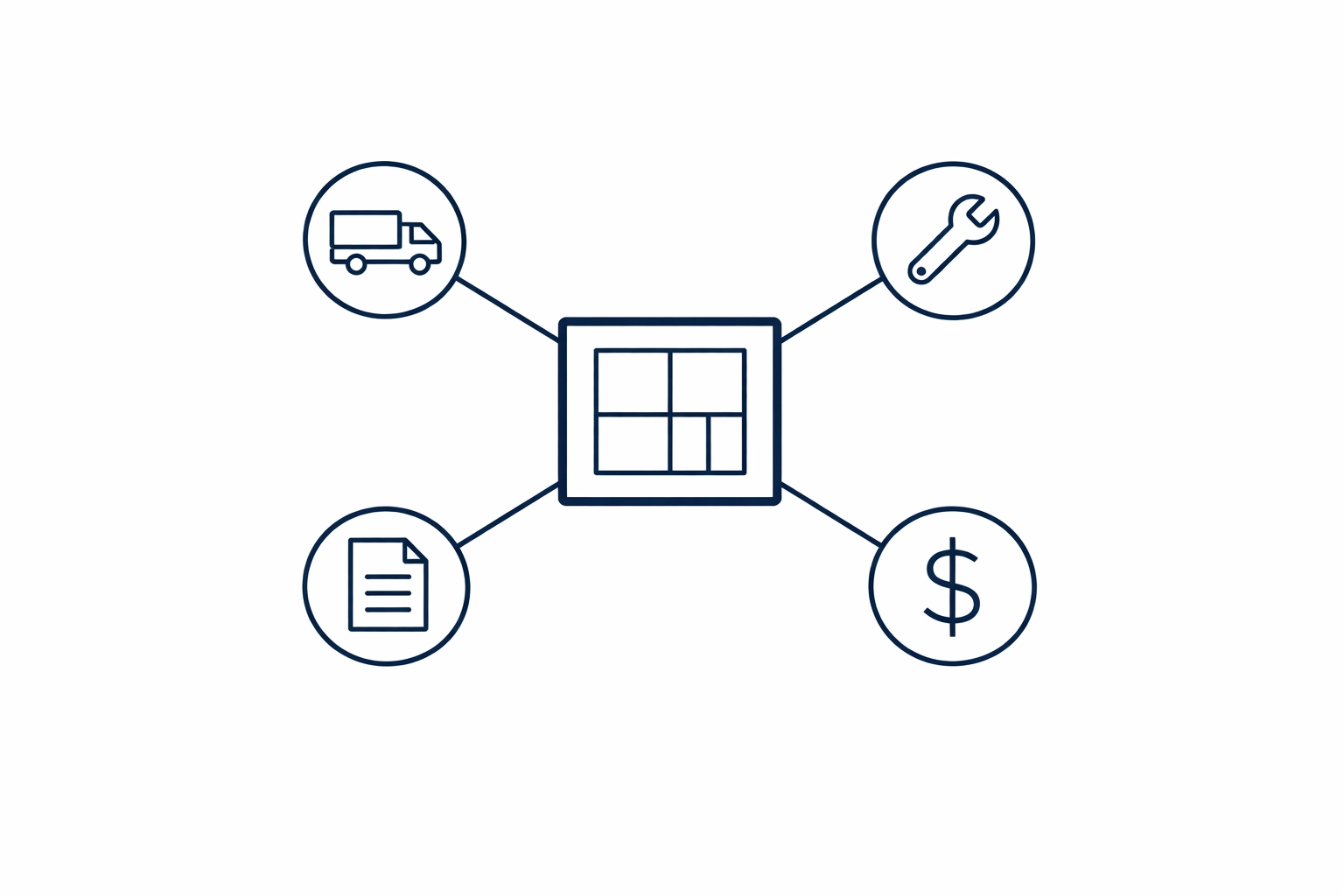
Overdue tracking becomes automatic. Your dashboard flags overdue invoices without manual reports. You know exactly who owes what, how long they've owed it, and whether it's time for a follow-up call. Collections become proactive, not reactive.
This isn't theory. Companies that implement real-time dashboards see invoice timing drop from 48+ hours to under four hours. Payment speed increases by 60-80%. And profit margins stop being a mystery.
The Systems-for-Revenue Framework
Here's how Sentric Group approaches this for plumbing companies:
Step 1: Audit the gap. We map every step from dispatch to invoice, identify where information gets lost, and quantify exactly how much it's costing you. Most plumbing companies don't realize they're losing $15K monthly until we show them the math.
Step 2: Connect the tools. We don't rip out your existing systems. We connect them. Your field service software talks to your accounting software. Your inventory system updates in real time. Your dashboard pulls from all of them, creating one source of truth.
Step 3: Build the dashboard. Custom KPI tracking built specifically for plumbing operations. Tech performance. Job profitability. Billing timelines. Collections status. Everything you need to run profitably, visible at a glance.
Step 4: Automate the invoicing. Mobile invoicing that happens on-site, with integrated payment processing. Your techs close jobs and send invoices in under two minutes. Customers pay before the truck leaves.
Step 5: Optimize over time. We don't build the dashboard and disappear. We track what's working, adjust what isn't, and continuously tighten the gap between dispatch and invoice.
The goal isn't just faster billing. It's turning your operations into a revenue-generating system instead of a cost-eating mess.
What Faster Invoicing Actually Looks Like
One of our plumbing clients was running eight trucks and consistently 45 days behind on collections. Jobs were getting done, but invoices took three to five days to go out. Customers weren't ignoring invoices: they just weren't getting them promptly.
We implemented real-time dashboards with mobile invoicing. Within 30 days:
- Average invoice time dropped from 72 hours to 3 hours
- Payment speed increased by 68%
- Monthly cash flow improved by $22K without adding a single new customer
They didn't hire more office staff. They didn't change their pricing. They just closed the gap.
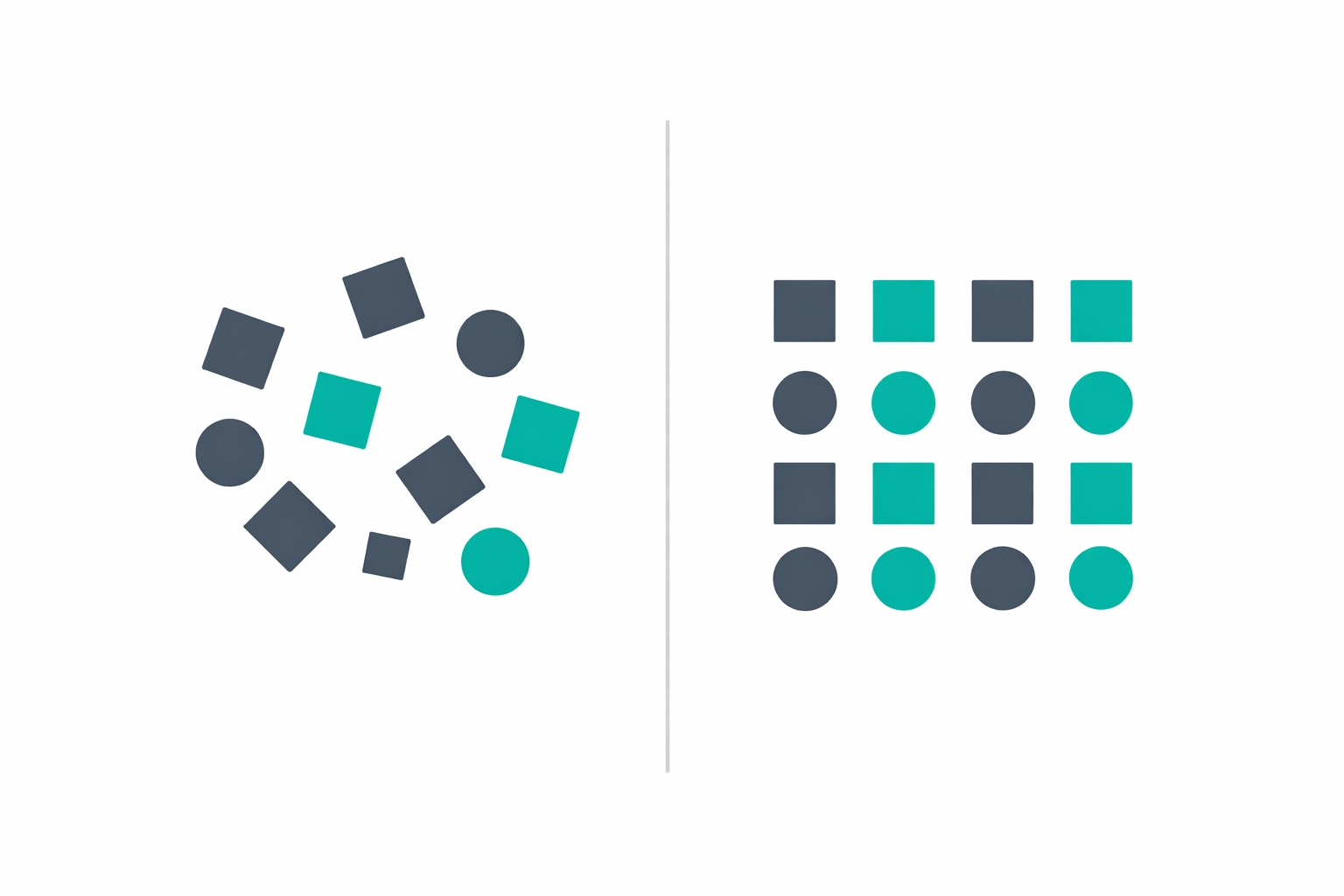
That's the difference between systems that track what happened yesterday and dashboards that show what's happening right now.
Stop Guessing, Start Tracking
You've built a solid plumbing operation. Your techs are good. Your customers are happy. But if you're still waiting days to invoice completed jobs, you're leaving money on the table.
The dispatch-to-invoice gap isn't a minor inefficiency. It's a profit leak that compounds daily. Real-time dashboards don't just speed up billing: they give you the visibility to run a truly profitable operation.
Before you add another truck or hire another tech, close the gap.
Ready to see where your profit's disappearing? Sentric Group specializes in KPI dashboard consulting for home services companies. We'll audit your dispatch-to-invoice process, show you exactly what it's costing, and build the systems that turn operations into revenue. Book a free systems audit and let's close the gap.