
February 17, 2026 | By Tim
You've got five trucks on the road. Maybe seven. Your phone rings every twenty minutes with some version of the same question: "Where's Marcus?" "Did the truck break down?" "Why hasn't anyone shown up yet?"
You built this HVAC business to run like clockwork. Instead, you're spending half your day playing detective, calling techs, checking their last known locations, wondering if the guy who said he'd be done by 2:00 is still sitting at that job from 9:00 AM.
There's a better way. And it doesn't involve micromanaging your team or adding more dispatch staff.
The Blind Spots Cost You More Than You Think
Most HVAC owners operate with what I call "dispatch by phone call." A customer calls. Dispatch guesses which truck is closest. They call the tech. The tech says he'll be done soon. Repeat this circus 15 times a day.
Meanwhile:
- You've got a tech sitting in traffic for 40 minutes when another crew just finished a job two blocks from the emergency call
- A truck needs an oil change 500 miles ago, but nobody noticed until it's smoking on the highway
- Someone's driving your $35,000 fully-loaded service van at 10 PM on a Saturday, and you have no idea why
- Your best tech says he worked 11 hours, but you have no way to verify it without starting an argument
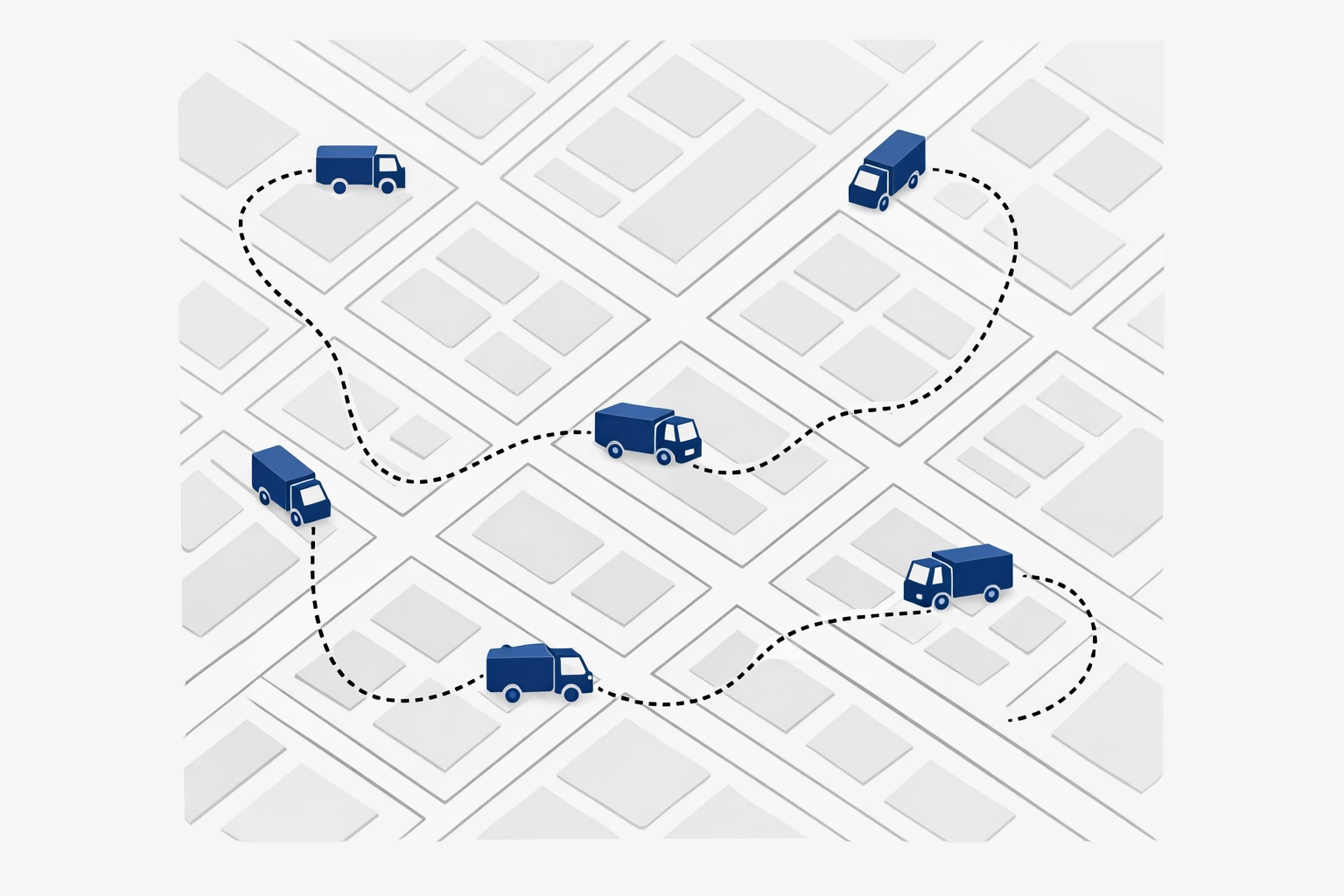
These aren't edge cases. This is every single day when you're running blind.
What Real-Time Visibility Actually Looks Like
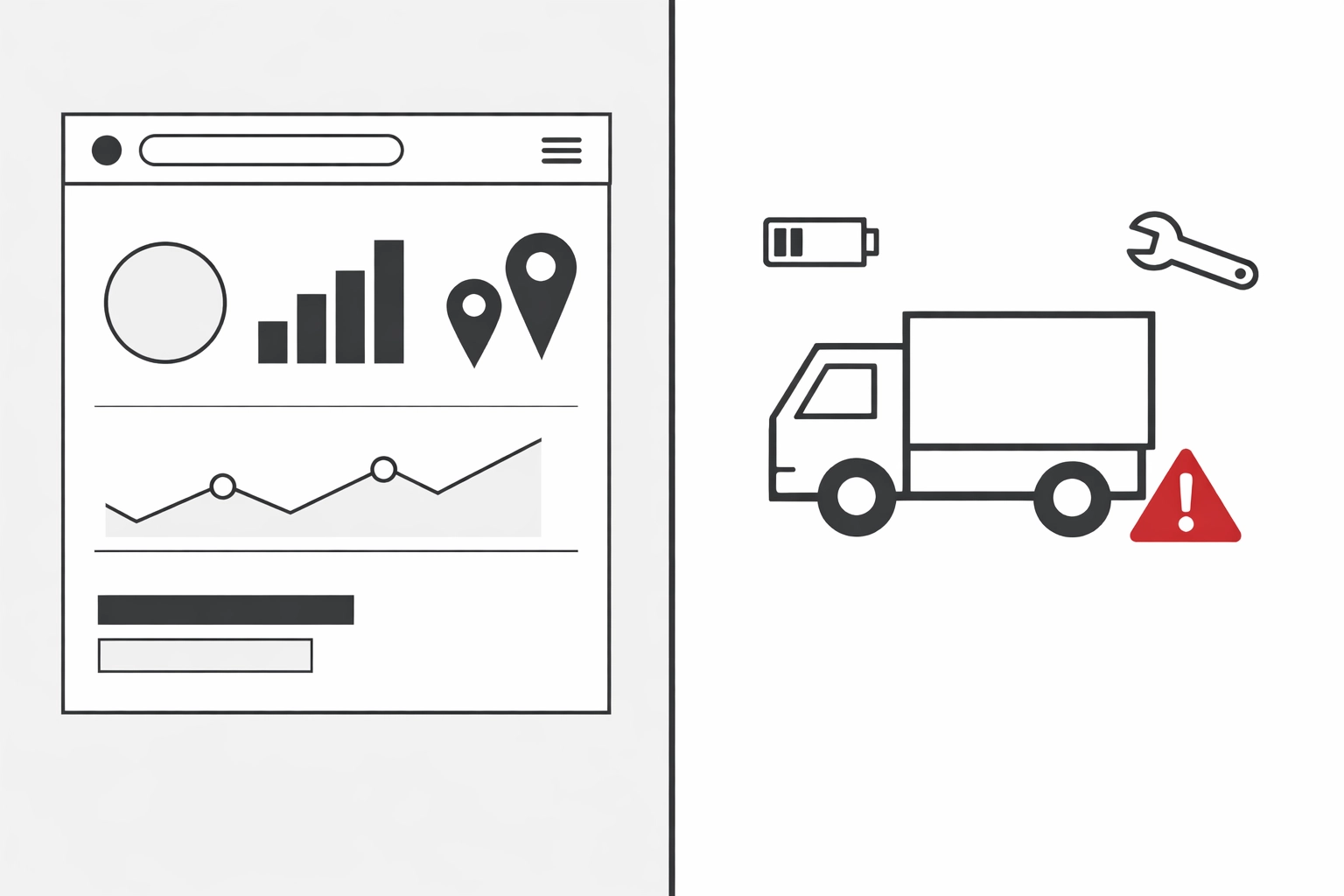
A real-time KPI dashboard gives you a single screen that shows every vehicle's location, status, and health metrics: updated every few seconds.
You open your laptop and instantly see:
- Where every truck is right now (not where they said they'd be an hour ago)
- Which techs are en route, on-site, or finishing up
- Vehicle diagnostics: battery health, check engine lights, maintenance alerts
- A breadcrumb trail showing everywhere each vehicle has been throughout the day
No phone calls. No guessing. No "let me check and call you back."
When an emergency call comes in for a furnace failure, your dispatcher clicks the map, sees that Jake just wrapped a maintenance call three miles away, and routes him there. The customer gets help in 12 minutes instead of 90.
That's not efficiency theater. That's actual operational improvement.
The Four KPIs That Change Everything
1. Truck Location and ETA Accuracy
You're not tracking your techs to babysit them. You're tracking location data so you can make smarter dispatch decisions.
Real-time GPS means you can tell a customer "We'll be there in 18 minutes" with actual confidence. It means you can handle emergency calls without playing phone tag. It means your dispatcher can see that three trucks are finishing jobs within the next 30 minutes and plan the afternoon accordingly.
The side benefit? When a customer calls asking "where's my tech?", you give them an exact answer in five seconds. No holds. No callbacks. Just facts.
2. Vehicle Health Monitoring
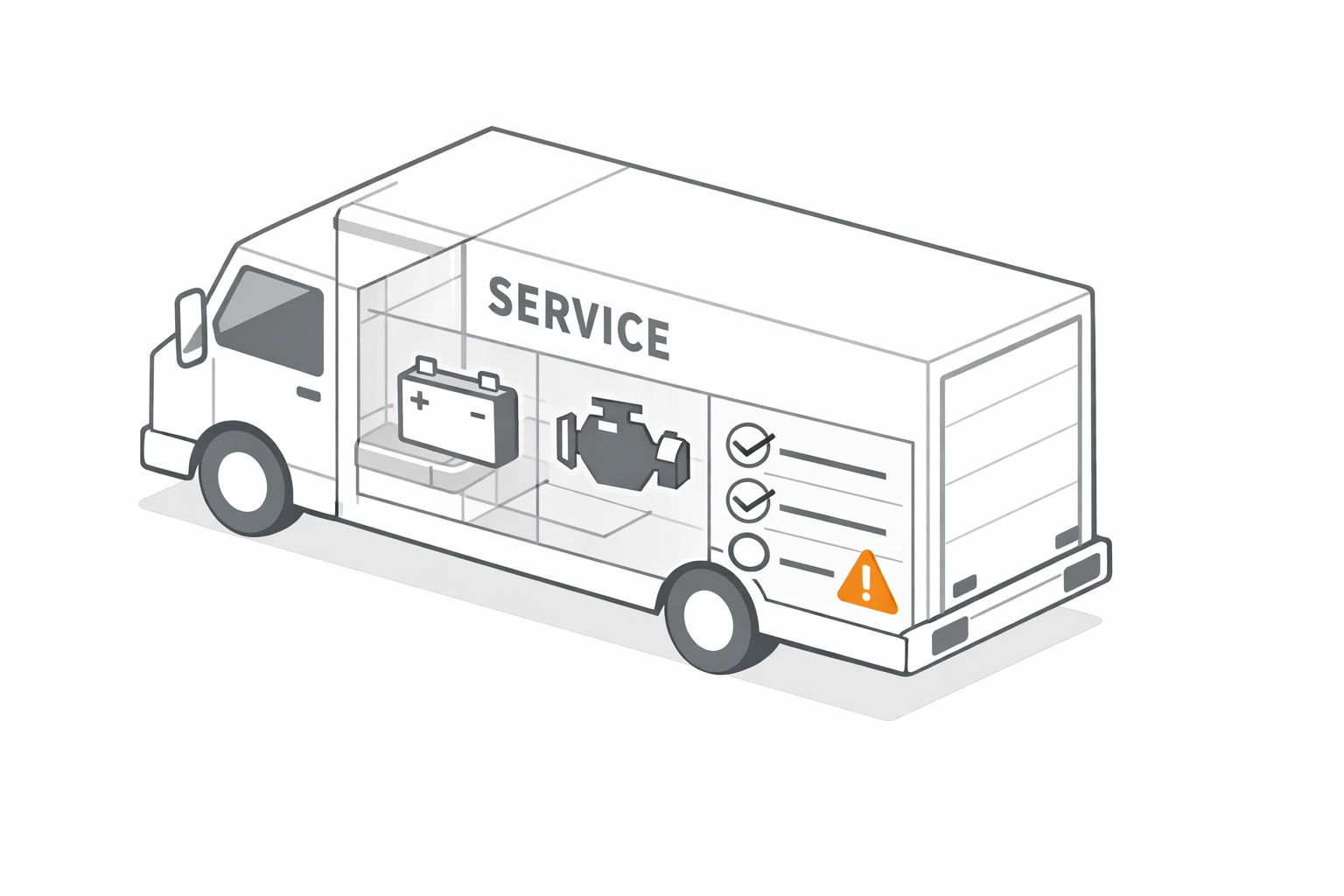
Your trucks aren't just transportation. Each one carries $15,000 to $35,000 in tools, refrigerants, and diagnostic equipment. When a vehicle breaks down, you're not just paying towing fees: you're losing billable hours, rescheduling jobs, and scrambling to redistribute equipment.
A good dashboard monitors:
- Battery charge levels
- Engine diagnostics
- Sensor malfunctions
- Scheduled maintenance windows
You get an alert that Truck 4 needs an oil change in 200 miles. You schedule it during a slow Thursday morning instead of discovering it when the engine seizes on the way to a $3,500 install.
3. First-Time Fix Rates by Technician
Some techs close jobs on the first visit. Others keep coming back because they didn't bring the right parts or misdiagnosed the issue.
Your dashboard can show first-time fix rates by technician over the past 30 days. You start noticing patterns:
- Mike fixes 89% of jobs on first visit
- Dave's sitting at 64%
That's not a performance review. That's a training opportunity. Maybe Dave needs a better troubleshooting checklist. Maybe he's rushing diagnostics. Maybe he needs a mentor ride-along with Mike for a week.
You can't fix what you can't see.
4. After-Hours Vehicle Movement
You've got six trucks. One of them is moving at 11:37 PM on a Tuesday. No emergency calls scheduled. No on-call tech assigned to that vehicle.
Either someone's using your truck for personal errands, or there's a legitimate explanation you need to hear.
A dashboard with after-hours alerts doesn't make you a paranoid boss. It protects your assets and ensures company vehicles are used for company work. Most of the time, there's a good reason. But the 10% of the time when there isn't? That alert just saved you thousands.
How This Prevents Micromanagement
Here's the thing: visibility isn't surveillance.
Micromanagement is calling your techs every hour asking "where are you now?" Visibility is checking a screen and knowing where everyone is without interrupting them.
Your techs don't want you breathing down their necks. And you don't want to spend your day chasing updates. A real-time dashboard solves both problems.
You're not watching their every move. You're watching the data that matters: so you can step in when there's an actual issue and stay out of the way when things are running smoothly.
Your best techs will appreciate this. They know they're doing good work. They'd rather you have the data to back that up than constantly question them.
The Dispatch Board That Updates Itself
Traditional dispatch is a nightmare of sticky notes, dry-erase boards, and frantic phone calls.
A KPI-driven dispatch board syncs with real-time vehicle data. When a tech marks a job complete on his tablet, the dispatch board updates automatically. His status changes from "on-site" to "available." His vehicle location updates. His next job populates at the top of his queue.
No radio calls. No "did you finish yet?" texts. No manual updates.
Your dispatcher can focus on routing decisions and customer communication instead of chasing status updates. That's the difference between managing six trucks comfortably and drowning under eight.
Integration With Payroll and Timesheets
GPS-linked timesheets are a game-changer for payroll accuracy.
Your dashboard tracks when techs arrive at job sites and when they leave. That data flows directly into your payroll system. No more handwritten time cards. No more disputes about hours worked. No more "I forgot to clock in" situations.
This protects both you and your techs. They get paid accurately for time worked. You get verifiable records if there's ever a question.
It also highlights inefficiencies. If a 90-minute job is consistently taking three hours, that's worth investigating. Maybe the job scope is wrong. Maybe there's a training gap. Maybe the part supplier is slow. You can't improve what you don't measure.
What KPI Dashboard Consulting Actually Does
You might be thinking: "This sounds great, but I don't have time to build a custom dashboard or learn new software."
That's where KPI dashboard consulting comes in.
A consultant helps you:
- Identify which KPIs actually matter for your operation (not just vanity metrics)
- Connect your existing tools: GPS tracking, dispatch software, accounting system: into one unified view
- Set up automated alerts so you're notified about the things that need your attention
- Train your team to use the dashboard without turning it into another bureaucratic burden
The goal isn't to give you more data. It's to give you better decisions.
Most HVAC owners don't need a data science degree. They need a clean, simple dashboard that shows truck locations, job status, and vehicle health. That's it. Everything else is noise.
A good consultant builds exactly that: no bloat, no unnecessary complexity, just the visibility you need to run a fleet without losing your mind.
Before You Add Another Truck
You're probably thinking about expanding. Maybe you're at five trucks and considering six. Or you're at seven and wondering if you can handle ten.
Here's the truth: adding trucks without adding visibility doesn't scale. It multiplies chaos.
The jump from five trucks to eight isn't 60% more work. It's 200% more work: if you're still managing by phone call.
But with a real-time dashboard? The jump from five to eight is barely noticeable. You've got the same single screen. The same automated updates. The same instant visibility.
You're not working harder. You're working with better information.
Get the Visibility You Actually Need
If you're running more than three HVAC trucks and you don't have real-time visibility into where they are and what they're doing, you're guessing your way through every day.
You don't need to micromanage your team. You need to see the data that helps you make better dispatch decisions, catch maintenance issues before they become breakdowns, and protect your assets.
At Sentric Group, we help HVAC companies set up KPI dashboards that provide real-time visibility without the complexity. We connect your existing tools, identify the metrics that actually matter, and give you a system that scales as your fleet grows.
Stop playing phone tag with your techs. Start seeing your entire operation in real time.
Sentric Group
Business Operations Consulting | Systems Integration | Workflow Automation
Helping home service businesses build clarity, not chaos.