You've bought the software. ServiceTitan, Housecall Pro, FieldEdge: maybe all three at different points. You've paid for integrations, watched the training videos, and assigned logins to your team. Yet somehow, your dispatch board is still a mess. Your techs are still calling the office asking where their next job is. Your CSRs are still manually copying job notes from one system to another.
The software works fine. The problem is that software doesn't fix broken systems. It just automates the chaos faster.
The Software-First Trap
Most home services operators approach operational problems the same way: find the tool that promises to solve it. Need better scheduling? Buy scheduling software. Want to track inventory? Get an inventory app. Struggling with invoicing? Subscribe to an invoicing platform.
Before long, you're paying for six subscriptions, none of which talk to each other, and your team is spending half their day manually bridging the gaps. The tools aren't the problem: they're just exposing the fact that you never had a system in the first place.
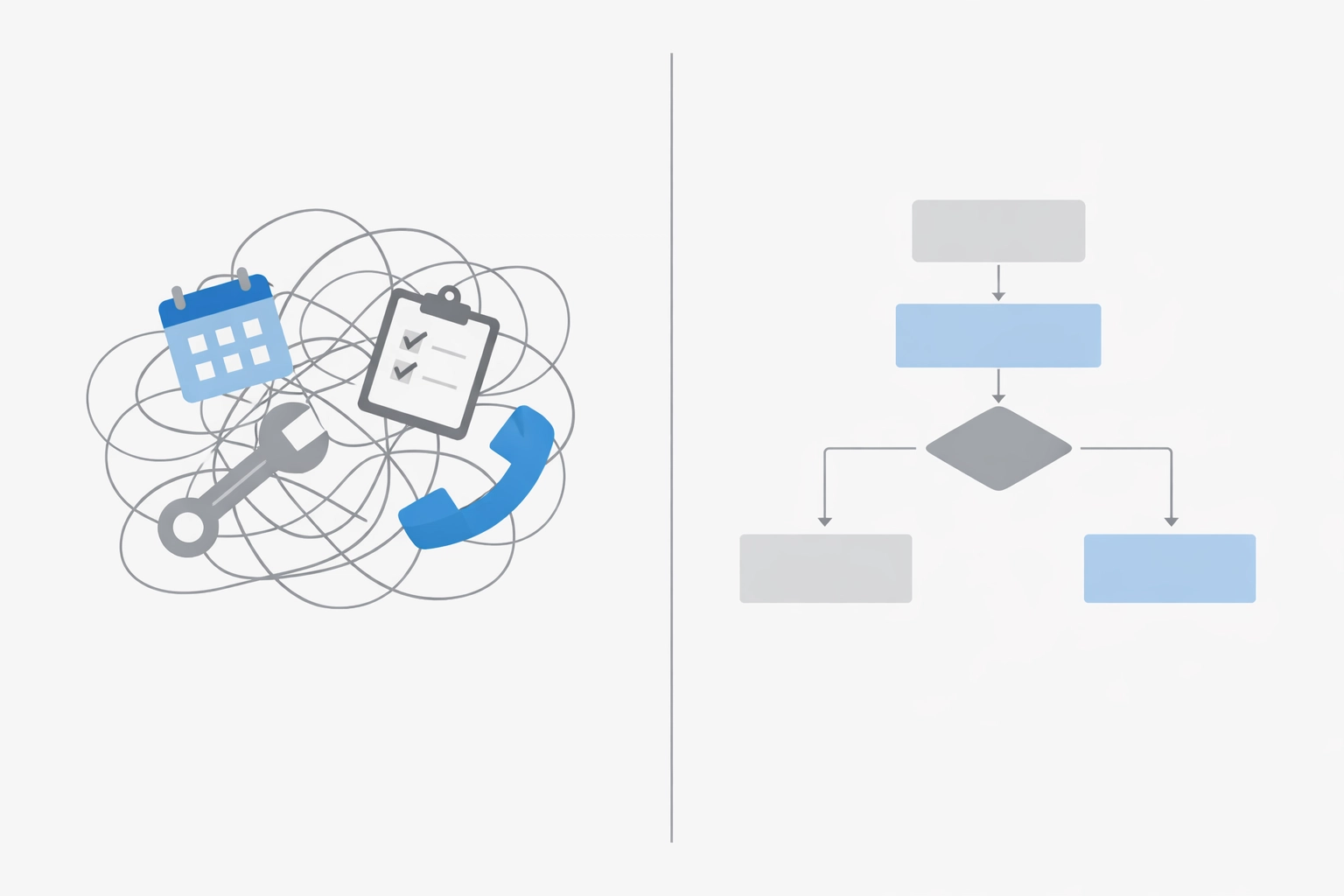
A system isn't a tool. It's the blueprint for how work moves through your operation. It's the step-by-step process that dictates who does what, when, and how information flows from one person to the next. Software can support a system. But it can't create one.
When you buy software without building the system first, you're essentially automating a process that doesn't exist. And automation without structure is just expensive confusion.
What "Systems-First" Actually Means
At Sentric, we operate on a simple philosophy: systems come first, tools come second. That means before we recommend a single piece of software, we map out the actual workflow. We ask questions like:
- When a customer calls, who answers?
- What information gets captured?
- How does that information reach dispatch?
- How does dispatch assign the job?
- What does the tech see when they open the job?
- What happens when the job is complete?
- How does billing know what to invoice?
These aren't software questions. They're systems questions. And until you have clear, documented answers, no amount of technology will make your operation run smoothly.
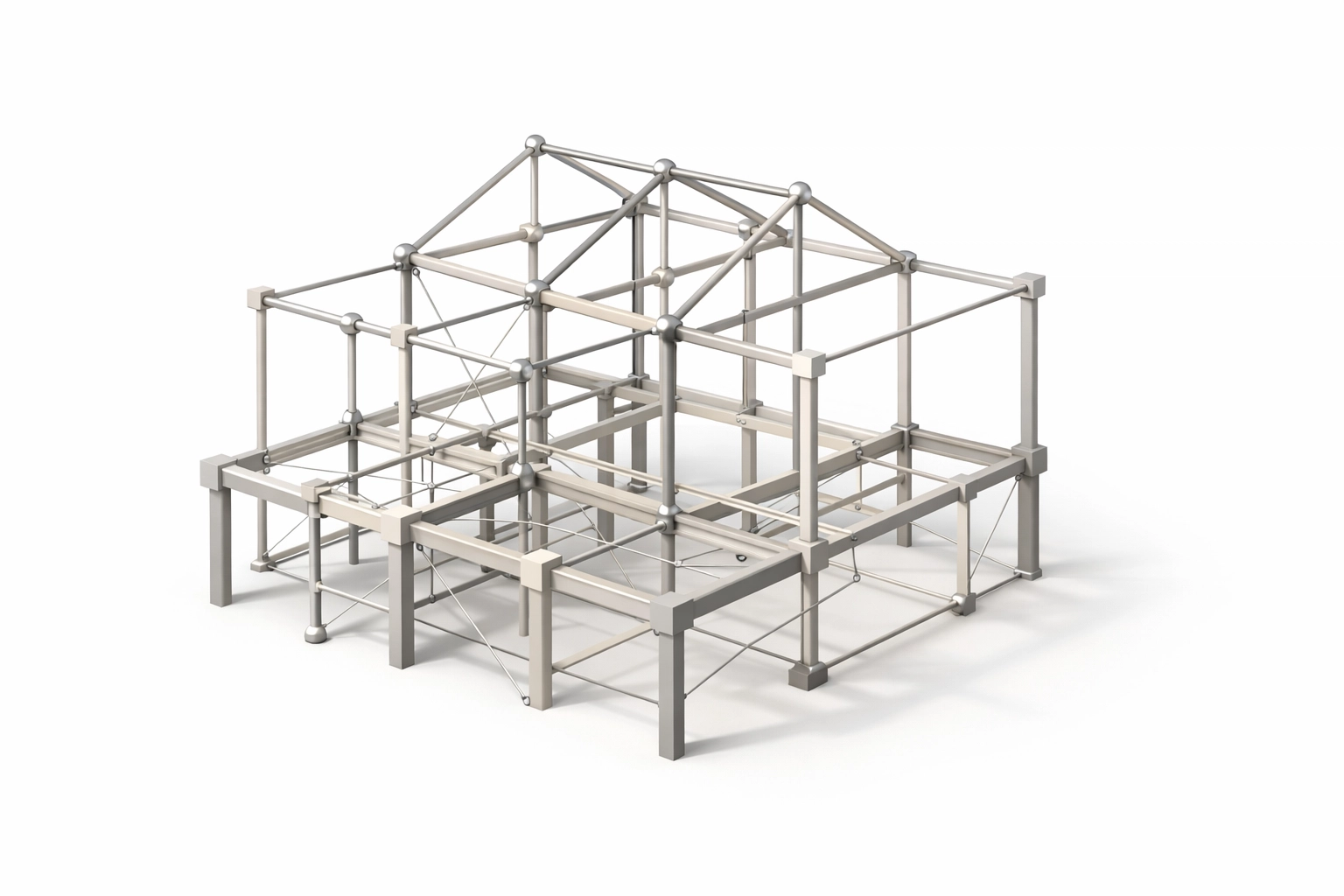
A system is the skeleton. Software is the skin. You can't hang skin on a body that has no bones.
Once the system exists: once you've defined the sequence of steps, the handoffs, the decision points, and the data flows: then you choose tools that support it. Not the other way around.
The Human Element: Why "Human-Led" Matters
Here's the part that most SaaS companies won't tell you: your team is smarter than your software.
Technology can execute. It can repeat. It can store and retrieve. But it can't think. It can't adapt in real time when a customer changes their mind mid-job. It can't reassure a frustrated homeowner. It can't intuit that the guy who just called three times in an hour probably needs a priority callback.
A human-led operation means your people make the decisions. The tools just make it easier to execute those decisions consistently.
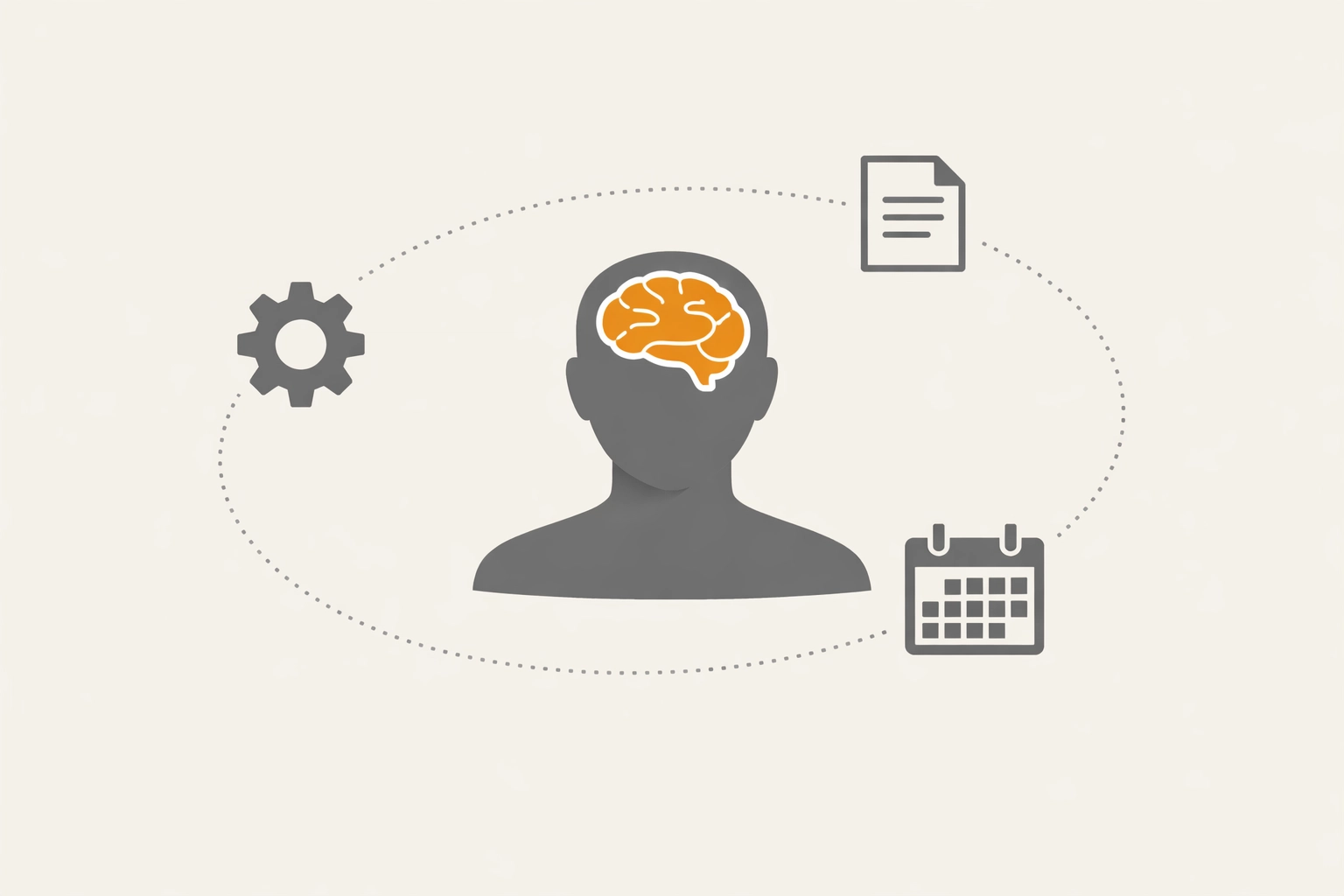
When you flip that relationship: when software dictates the process and humans are forced to work around its limitations: you create frustration, workarounds, and inefficiency. Your dispatcher starts keeping a side spreadsheet because the system "doesn't let them" prioritize certain jobs. Your techs start texting each other job details because the app takes too long to load.
Human-led means the system is designed around how your team actually works, not how a software developer thinks they should work. The tools are there to support, not to dictate.
Tool-Smart vs. Tool-Dependent
Being "tool-smart" doesn't mean using the fanciest software on the market. It means using the right tools for your specific system, and only as many as you actually need.
We've worked with contractors running $5 million operations on Google Sheets and a well-structured process. We've also worked with contractors spending $2,000/month on software they barely use because no one took the time to connect it to an actual workflow.
Tool-smart operators ask:
- Does this tool eliminate a manual step in our system?
- Does it integrate cleanly with the tools we already use?
- Will my team actually adopt it, or will it become shelfware?
- Can we achieve the same result with something we already own?
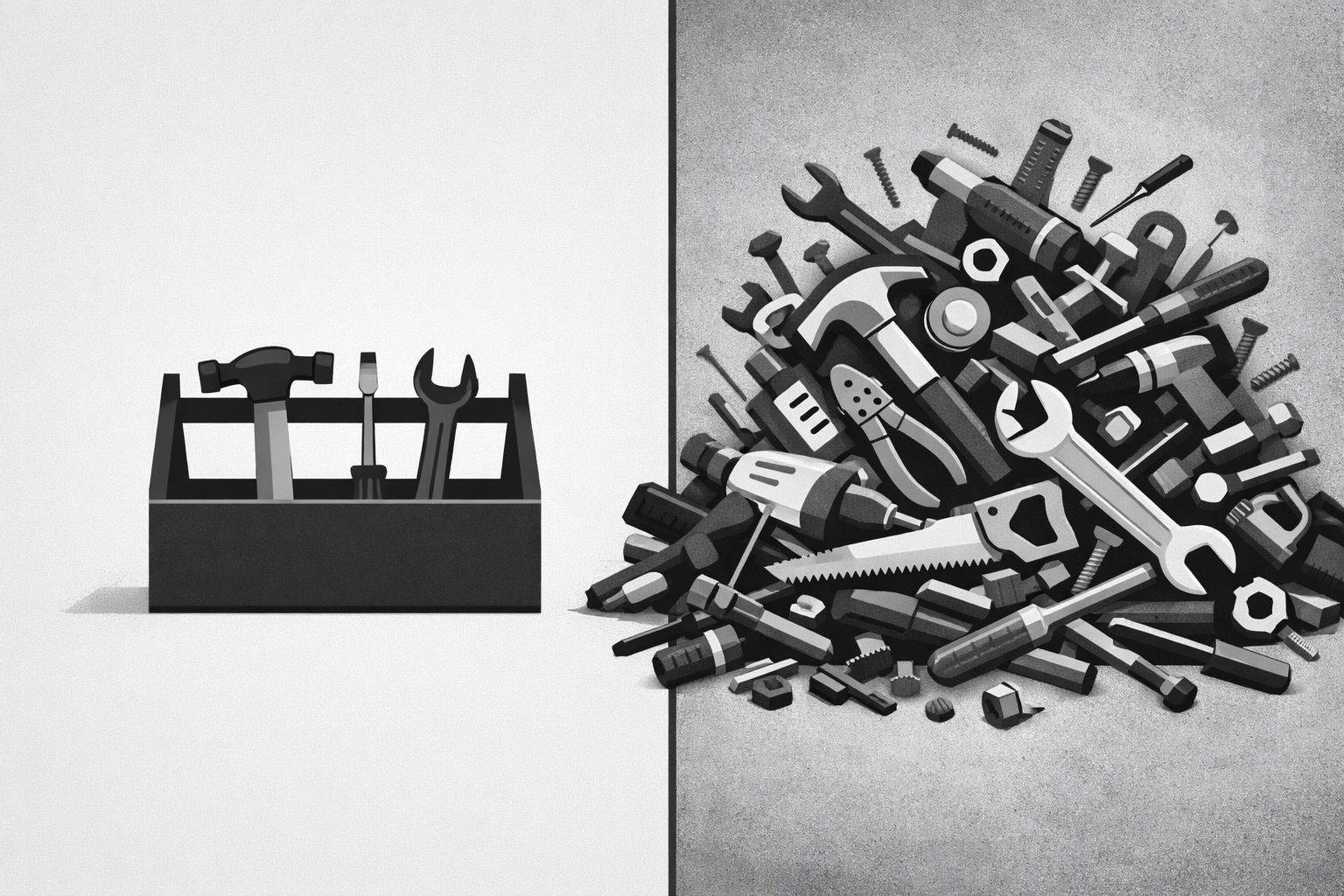
Tool-dependent operators just keep buying. Another dashboard. Another integration. Another "all-in-one" platform that promises to solve everything but ends up creating ten new problems.
The difference is clarity. Tool-smart businesses know what problem they're solving before they go shopping. Tool-dependent businesses are hoping the next purchase will finally make the pain stop.
What This Looks Like in Practice
Let's say you're struggling with job completion delays. Techs are finishing jobs but not closing them out in the system until the end of the day. That delay creates a bottleneck in billing, which creates a lag in cash flow.
A software-first approach says: "We need job completion tracking software with automatic notifications."
A systems-first approach says: "Why aren't techs closing jobs in real time? Is the app too clunky? Is there a step they're skipping because it's unclear? Are they waiting for office approval on something that shouldn't require approval?"
You investigate. You learn that techs aren't closing jobs because they're unclear on whether they need to upload photos before or after closing. The software allows both, but the office wants photos first. Nobody documented that. So techs just wait until the end of the day and do it all at once.
The fix isn't new software. The fix is a clearer system: "Photos first, then close the job. If no photos are needed, mark 'N/A' and close immediately."
You update your process document. You train the team. Suddenly, jobs close on time. Billing moves faster. Cash flow improves.
Same software. Better system.
Clarity, Automation, and Calm
The businesses that scale successfully aren't the ones with the most software. They're the ones with the clearest systems. When every person knows exactly what to do, when to do it, and how their work connects to the next person's work, operations run smoothly.
Software amplifies that clarity. It makes it easier to execute the system consistently, at scale, without human error. But clarity has to come first.
If your operation feels chaotic, the answer isn't another tool. It's stepping back and asking: Do we have a system, or do we just have a collection of tasks that people figure out on the fly?
Because once you have the system, the tools become obvious. And once the tools are supporting a solid system, you get what every operator is actually looking for: calm.
Not the fake calm of "everything's fine" while problems pile up in the background. The real calm of knowing that when something breaks, you have a process for fixing it. When volume spikes, you have a system for scaling. When a key person is out, someone else can step in because the work isn't locked in their head: it's documented, repeatable, and supported by the right tools.
Start With the System
You've probably spent thousands of dollars on software that promised to fix your operation. And you're still here, looking for the thing that will actually work.
The thing that works isn't software. It's a system. Built by humans. Documented clearly. Supported by tools that make it easier to execute.
Before you buy another subscription, ask yourself: Do I have a system, or am I just hoping this tool will create one for me?
If the answer is the latter, it's time to build the bones first.
Ready to map out the system before you spend another dollar on tools? Start with a Systems Audit and see where clarity can replace chaos.
Sentric Group | Business Operations & Systems Consulting
Helping home services contractors build systems that scale( without the chaos.)